Key Points
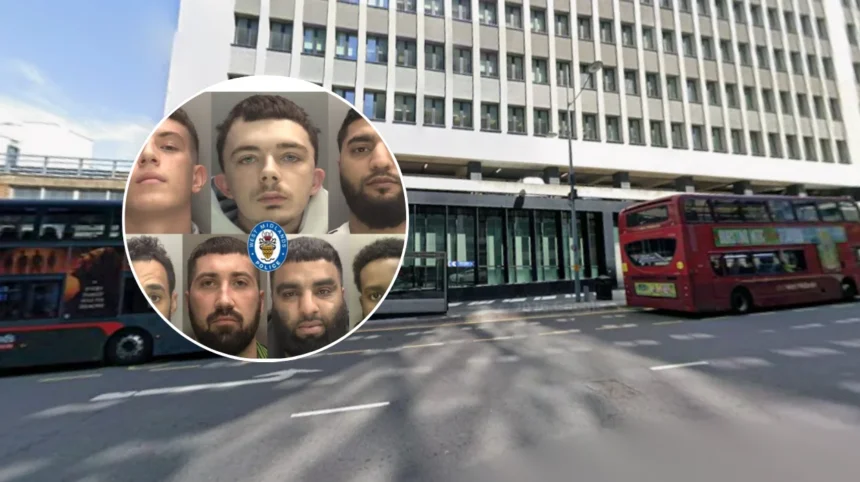
- Birmingham Crown Court sentenced seven men involved in running a multi-million-pound Class A drug syndicate.
- The gang supplied crack cocaine, heroin, and cocaine across Smethwick, Wednesbury, Walsall, and Birmingham using a drug line known as the ‘P Line’.
- Investigators found the syndicate worked on a 22-hour daily shift rota to handle continuous phone calls and text messages from buyers.
- Raids in 2025 led to the seizure of multiple kilograms of Class A drugs, tens of thousands of pounds in cash, and mobile phone videos showing gang members posing with profits.
- The defendants received individual prison terms ranging from five years to more than 12 years, totaling over 61 years combined.
Birmingham (Birmingham Express) September 19, 2026 – As reported in the official release from West Midlands Police, Detective Sergeant Adam Buzzard of the County Lines Taskforce detailed the scale and intent of the operation following the sentencing hearing.
Detective Sergeant Adam Buzzard stated: “This group ran a significant drugs line around the Black Country and wider area. They were meticulous in their planning to ensure the drug line ran all hours of the day, every day. However, thanks to our excellent investigative skills, we were able to identify those involved in the line and secure significant jail time for all seven. Drugs cause harm within communities and we’re carrying out action day in, day out, to disrupt supply lines across the region.”
Background of the particular development after the news
County lines drug operations represent a structured model of narcotics distribution within the United Kingdom, where organized crime groups establish dedicated mobile phone lines—often termed “deal lines”—to manage orders and deploy regional runners to distribute controlled substances across urban, suburban, and coastal areas. Over recent years, law enforcement agencies across the UK, including West Midlands Police, have prioritized dedicated taskforces to target the higher tiers of these operations rather than focusing solely on lower-level street dealers.
The establishment of regional County Lines Taskforces has led to increased focus on telecommunications data, financial tracking, and targeted warrant execution. The dismantling of the ‘P Line’ follows a broader multi-year enforcement strategy across the West Midlands designed to disrupt established commercial drug networks that generate substantial revenue through continuous distribution schedules.
Prediction: How this development can affect the regional population and local enforcement landscape
The sentencing of the ‘P Line’ syndicate and the recovery of commercial quantities of Class A narcotics are anticipated to have several immediate and longer-term effects on local communities, law enforcement tactics, and regional criminal structures across the Black Country and Birmingham.
Impact on Community Safety and Local Residents
For residents in Smethwick, Wednesbury, Walsall, and Birmingham, the removal of an established 22-hour distribution network is likely to result in a localized drop in street-level anti-social behavior, opportunistic crime, and public safety disturbances associated with open drug supply. Furthermore, the seizure of high-purity Class A supplies temporarily reduces the availability of illicit substances in these specific catchment areas, potentially lowering drug-related medical emergencies and localized violence tied to territory disputes.
Shift in Law Enforcement Operations
The successful prosecution of a complete County Lines hierarchy—from the primary coordinator to operational runners—serves as a precedent for ongoing regional investigations. West Midlands Police are expected to continue allocating investigative resources toward long-term telecommunications tracking and digital forensics rather than short-term street arrests. This method allows authorities to secure multi-year conspiracy convictions against line holders and coordinators who do not physically handle street-level sales.
Potential Displacement and Criminal Adaptation
Within the illicit drug market, the removal of a dominant syndicate often creates a temporary supply vacuum. Smaller criminal groups or rival networks operating within the West Midlands may attempt to move into the coverage areas previously serviced by the ‘P Line’. Consequently, local law enforcement agencies will likely maintain targeted surveillance across Wednesbury, Darlaston, and neighboring districts to prevent secondary lines from establishing new supply routes in the wake of these incarcerations.