Key Points
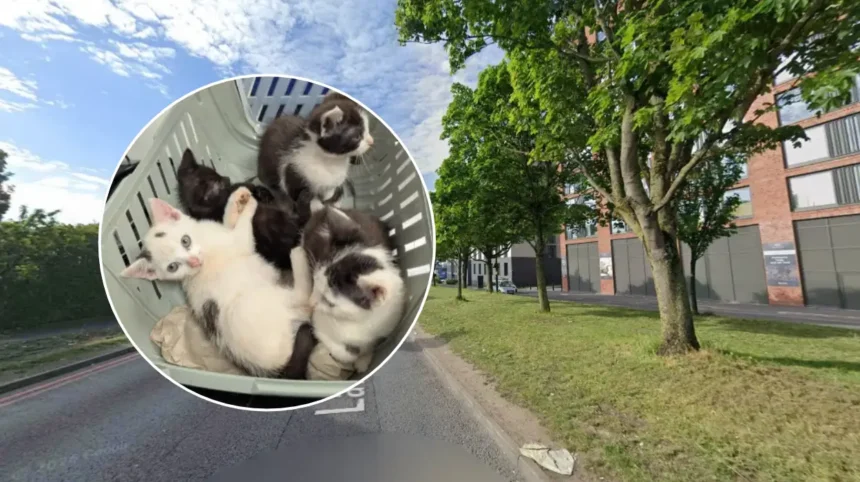
- A passer-by found 26 cats and kittens sealed inside taped plastic boxes and pet carriers abandoned beside fly-tipped rubbish in a Birmingham alleyway.
- Many of the animals were lethargic, struggling to breathe, severely underweight, and covered in fleas when they were discovered.
- RSPCA Animal Rescue Officer Paul Nijjar described the abandonment as “incredibly cruel” and asked anyone with information or CCTV footage to contact the charity on 0300 123 8018.
- Vets at Birmingham Animal Hospital are treating two cats, Mauve and Mr Gold, for severe dehydration and anaemia, while the other 24 animals are recovering across local RSPCA rescue facilities and foster homes.
Birmingham (Birmingham Express) October 17, 2026 — The Royal Society for the Prevention of Cruelty to Animals (RSPCA) has launched an investigation following the discovery of 26 cats and kittens abandoned beside fly-tipped rubbish in an alleyway on Hawthorn Road, Birmingham.
The felines were spotted in the middle of the day by a passer-by between a bakery and a local shop. Several of the animals were sealed inside plastic boxes taped shut with heavy adhesive tape, restricting airflow.
As reported by Harry Leach of Birmingham Live, RSPCA Animal Rescue Officer Paul Nijjar stated that “This was clearly a distressing discovery. Twenty-six cats and kittens, with some shut in sealed plastic boxes.”
The member of the public who made the discovery immediately peeled back the tape to allow air into the containers, moved as many animals as possible into pet carriers, and contacted animal welfare authorities.
What Condition Were the Dumped Felines Found In?
Upon inspection by welfare officers, the animals were found to be in poor health following their prolonged confinement without adequate ventilation.
As reported by Harry Leach of Birmingham Live, RSPCA Animal Rescue Officer Paul Nijjar stated that “The finder said when he came across them, many were lethargic and appeared to be struggling to breathe in the boxes. They were all underweight and had a significant flea burden.”
Despite their traumatic ordeal and severe neglect, rescue staff noted that the cats remained exceptionally docile and human-orientated, indicating they had previously lived as domestic house pets.
Two of the cats, subsequently named Mauve and Mr Gold by rescue staff, were transferred to the Birmingham Animal Hospital for specialized veterinary care due to severe dehydration, anaemia, and high flea infestation.
The remaining 24 cats and kittens were dispersed into the care of local RSPCA rehoming branches and foster carers across the region to undergo physical rehabilitation.
How Are RSPCA Officers Tracking Down the Responsible Individuals?
RSPCA officers are actively examining local closed-circuit television (CCTV) footage around Hawthorn Road and surrounding streets in an attempt to trace the vehicles or individuals involved in leaving the containers.
As reported by Harry Leach of Birmingham Live, RSPCA Animal Rescue Officer Paul Nijjar stated that “This is an incredibly cruel way to treat defenceless cats and kittens. We know people are struggling, but there are ways to get help.”
The charity has asked anyone who was in the area around Hawthorn Road on 30 September, or who may have dashcam footage, to contact the RSPCA inspectorate appeal line on 0300 123 8018.
Officer Nijjar highlighted that unneutered pets remain a leading cause of sudden population explosions in households, urging owners to utilize charitable subsidised neutering schemes rather than abandoning animals.
As reported by Companion Life, RSPCA Animal Rescue Officer Paul Nijjar stated that “Cat owners who neuter their cats from four months of age will help to tackle this surge in unwanted pets. Kittens can become pregnant themselves as early as four months, which is why booking an appointment with a vet for early neutering is so important.”
Background of the Development
This incident comes as animal welfare organisations across the United Kingdom report record-high intake numbers and escalating abandonment rates. According to RSPCA historical operational figures, approximately 20,000 cats entered the charity’s care in 2025 alone, a figure welfare experts fear will be exceeded in 2026.
The persistent rise in pet abandonments has been linked by animal welfare charities to the ongoing economic pressures facing households, high veterinary care expenses, and the uncontrolled breeding of domestic felines. Unneutered domestic cats can reproduce rapidly, leading to unwanted litters that overwhelmed owners feel unable to support.
In response to similar incidents across the West Midlands and the broader UK, charities have consistently urged pet owners to seek financial assistance for neutering and food support from local animal shelters rather than leaving animals in life-threatening conditions.
Prediction: How This Development Affects Pet Owners and Animal Rescue Services
This incident highlights the mounting strain on local animal welfare infrastructure and indicates tighter challenges ahead for both rescue centres and pet owners in the West Midlands:
- For Animal Shelters & Rescue Services: Rehoming centres in Birmingham and surrounding regions are likely to experience severe capacity shortages. Taking in 26 animals from a single incident consumes substantial medical, dietary, and shelter resources, which may delay the intake of other stray or surrendered pets.
- For Local Communities & Pet Owners: Public awareness surrounding animal welfare laws will likely increase, leading to heightened vigilancy and reporting of suspected neglect. Additionally, pet owners facing financial hardship may see increased community-led outreach, such as mobile spay/neuter clinics and subsidised pet food banks funded by charitable donations.
- For Policy & Legislative Enforcement: The severity of this case may prompt stricter local enforcement of pet welfare regulations and microchipping compliance to ensure accountability and prevent future multi-animal abandonments.