Birmingham is one of the UK’s largest and most diverse cities, offering a combination of employment opportunities, relatively accessible housing, established universities, extensive transport connections and a diverse cultural environment. Located in the West Midlands region of England, the city attracts students, young professionals, families, international residents and people relocating from other parts of the country.
- Why Is Birmingham Considered a Good Place to Live in 2027?
- What Makes Birmingham Attractive to Residents?
- Is Birmingham Suitable for Different Types of Residents?
- What Is the Cost of Living in Birmingham in 2027?
- How Much Does Accommodation Cost in Birmingham?
- What Other Household Expenses Should Residents Consider?
- Is Birmingham Cheaper Than London?
- Which Are the Best Areas to Live in Birmingham in 2027?
- Is Edgbaston a Good Place to Live?
- Is Harborne Suitable for Families?
- Is Moseley a Good Place for Young Professionals?
- Is Sutton Coldfield Suitable for Families?
- Is the Jewellery Quarter Suitable for City Living?
- What Employment Opportunities Are Available in Birmingham?
- Which Industries Provide Jobs in Birmingham?
- What Do Employment Statistics Reveal About Birmingham?
- Is Birmingham Suitable for Graduates and Young Professionals?
- Is Birmingham a Good City for Students and Education in 2027?
- Which Universities Are Located in Birmingham?
- Is Birmingham Affordable for Students?
- Are Birmingham Schools Suitable for Families?
- How Good Is Public Transport in Birmingham?
- How Does the Birmingham Metro Work?
- Are Birmingham’s Bus Services Convenient?
- Can Residents Travel Easily Between Birmingham and Other UK Cities?
- Will Transport Improvements Benefit Birmingham in 2027?
- Is Birmingham a Safe Place to Live?
- What Do Crime Statistics Say About Birmingham?
- What Should Residents Check Before Renting or Buying?
- Does Neighbourhood Choice Affect Residential Safety?
- What Is Healthcare Like in Birmingham?
- Which Are the Main Hospitals in Birmingham?
- Are GP Services and Community Healthcare Available?
- Is Birmingham Suitable for Older Residents?
- What Lifestyle and Entertainment Can Residents Enjoy in Birmingham?
- What Shopping Facilities Are Available?
- Does Birmingham Have a Strong Food and Restaurant Scene?
- What Cultural Attractions Are Available?
- Are There Good Parks and Outdoor Spaces?
- What Are the Main Disadvantages of Living in Birmingham?
- Is Finding a Good Job Difficult in Birmingham?
- Does Birmingham Have Traffic and Congestion Problems?
- Are Household Expenses Increasing?
- Does Birmingham Face Local Government Challenges?
- How Is Birmingham Expected to Develop by 2027 and Beyond?
- Will Transport Investment Improve Birmingham?
- Will Birmingham Remain Attractive to Businesses?
- What Role Will Universities Play in Future Growth?
- Will Birmingham’s Population Influence Housing Demand?
- Should You Move to Birmingham in 2027?
Is Birmingham a good place to live in 2027? Yes, Birmingham is a strong option for people seeking a major UK city with comparatively affordable housing, educational opportunities, cultural diversity and access to regional employment markets. However, employment competition, neighbourhood differences, transport costs, crime and pressure on public services remain important considerations.
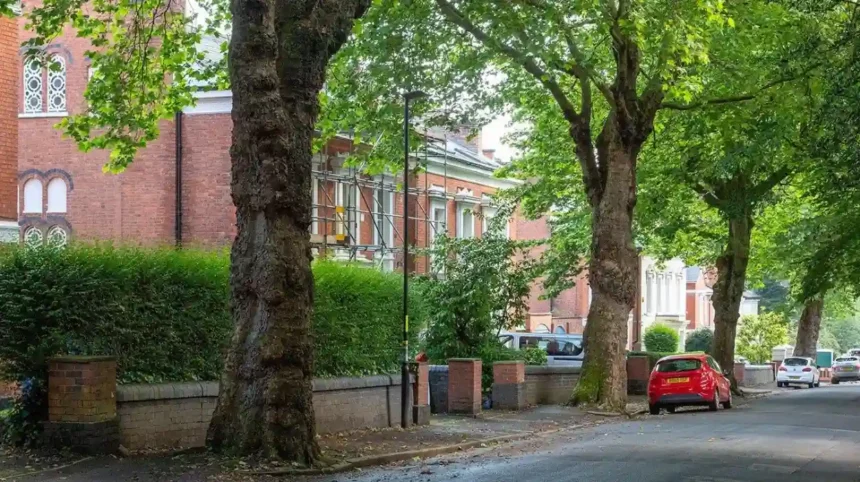
The city’s appeal comes from its combination of urban facilities and residential neighbourhoods. Residents have access to shopping districts, restaurants, entertainment venues, healthcare facilities, parks and educational institutions. Areas such as Edgbaston, Harborne, Moseley, Sutton Coldfield, Kings Heath and the Jewellery Quarter offer different residential environments.
Birmingham also faces significant economic and public-service challenges. Employment levels, household affordability, local authority finances and neighbourhood safety influence the experience of living in the city.
For anyone considering a move in 2027, understanding these factors provides a more realistic picture than relying on property prices or lifestyle attractions alone.
Why Is Birmingham Considered a Good Place to Live in 2027?
Birmingham is considered a good place to live because it combines comparatively affordable housing, diverse communities, established universities, major employers and extensive regional transport connections. Its neighbourhood variety also allows residents to choose between city-centre living, suburban environments and family-oriented residential communities.
Birmingham is located in the West Midlands, approximately 100 miles northwest of London. It is the administrative centre of the metropolitan district of Birmingham and an important economic and cultural centre for the wider region.
According to the Office for National Statistics (ONS), Birmingham’s estimated population reached 1,176,960 in mid-2025. This makes it one of England’s largest local authority areas by population.
The city’s population supports a substantial local economy, extensive public services and a wide range of cultural activities. Birmingham’s economy includes professional services, manufacturing, healthcare, education, retail, hospitality and technology-related businesses.
What Makes Birmingham Attractive to Residents?
Birmingham offers several practical advantages for people considering relocation.
Its housing market generally costs less than London’s. The city also provides access to universities, major hospitals, shopping centres and employment districts.
The city has a particularly diverse population. Residents experience different cultural traditions, languages, cuisines and religious communities across neighbourhoods such as Sparkhill, Handsworth, Small Heath and the city centre.
Birmingham also provides access to surrounding towns and cities, including Solihull, Coventry, Wolverhampton, Dudley and Walsall.
These connections make it possible to live in Birmingham while working elsewhere in the West Midlands.
Is Birmingham Suitable for Different Types of Residents?
Birmingham accommodates several residential lifestyles.
Students benefit from established universities and student accommodation around Selly Oak, Edgbaston and the city centre. Young professionals often consider the Jewellery Quarter, Digbeth and central Birmingham because of their proximity to workplaces and entertainment.
Families frequently investigate Harborne, Sutton Coldfield, Moseley and Kings Heath for their residential environments, schools and local facilities.
Retirees also find established suburban communities with parks, healthcare facilities and local shopping areas.
The suitability of each neighbourhood depends on household income, commuting requirements, property preferences and access to essential services.
What Is the Cost of Living in Birmingham in 2027?
Birmingham generally offers lower housing costs than London and several expensive southern English cities. However, residents still need to budget for rent, council tax, energy, food, transport and household expenses. Actual affordability depends on income, accommodation and lifestyle.
Housing is one of the most important considerations when evaluating Birmingham’s cost of living.
The latest available ONS local housing figures before 2027 show that the average Birmingham house price was approximately £235,000 in September 2026. Average private rent reached £1,112 per month in October 2026.
These figures provide a useful starting point for people planning a move in 2027, although property prices and rents change over time.
How Much Does Accommodation Cost in Birmingham?
Birmingham offers different property types, including apartments, terraced houses, semi-detached properties and detached family homes.
According to ONS figures for September 2026, average property prices were approximately:
- Detached houses: £442,000.
- Semi-detached houses: £274,000.
- Terraced houses: £221,000.
- Flats and maisonettes: £146,000.
The figures demonstrate the difference between property categories. Flats generally provide a lower purchase-price entry point, while detached properties require considerably larger budgets. Office for National Statistics
Private rental prices also vary according to property size.
ONS October 2026 figures recorded the following average monthly rents:
- One-bedroom property: approximately £825.
- Two-bedroom property: approximately £997.
- Three-bedroom property: approximately £1,127.
- Four-bedroom or larger property: approximately £1,569.
These are citywide averages rather than guaranteed rental prices in individual neighbourhoods. Office for National Statistics
What Other Household Expenses Should Residents Consider?
Rent or mortgage payments represent only one part of a household budget.
Council tax depends on the property’s valuation band and the applicable local authority charges. Utility bills depend on household size, property insulation and energy consumption.
Other regular expenses include groceries, broadband, mobile phone contracts, transport, insurance and childcare.
Residents should also account for water charges, maintenance expenses and unexpected household repairs.
People renting privately should check whether advertised rent includes utilities, furniture or other services. They should also review tenancy conditions, deposit protection and the property’s energy performance certificate.
Is Birmingham Cheaper Than London?
Birmingham generally provides a more accessible housing market than London.
The ONS recorded an average Birmingham house price of £235,000 in September 2026, compared with approximately £272,000 across the UK in June 2026. These figures use different reporting months, so they should not be treated as a direct same-month comparison. Nevertheless, Birmingham’s housing market remains below the national average in the available data. Office for National Statistics+1
For people relocating from London, housing costs represent a significant potential financial advantage.
However, the final cost difference depends on employment location, commuting expenses, household requirements and lifestyle.
Which Are the Best Areas to Live in Birmingham in 2027?
The best Birmingham neighbourhood depends on housing budget, commuting needs, schools and lifestyle. Edgbaston, Harborne, Moseley, Kings Heath, Sutton Coldfield and the Jewellery Quarter offer distinct residential environments, ranging from established suburbs to apartments near central employment and entertainment districts.
Birmingham contains neighbourhoods with different property markets, transport connections and community facilities. Choosing the right location is essential because the experience of living in one part of the city can differ considerably from another.
Is Edgbaston a Good Place to Live?
Edgbaston is an established residential area southwest of Birmingham city centre.
It is known for substantial period properties, green spaces, educational institutions and access to healthcare facilities. The University of Birmingham and Queen Elizabeth Hospital Birmingham are important local institutions.
Edgbaston suits professionals, academics, students and families who want access to central Birmingham without living directly in the busiest commercial districts.
Property prices vary according to street, building condition, property size and proximity to amenities.
Is Harborne Suitable for Families?
Harborne is a popular residential neighbourhood with an established high street, independent businesses, restaurants and everyday shopping facilities.
Its residential streets contain Victorian and Edwardian properties alongside modern housing developments.
Families consider Harborne because of its community facilities, schools and access to nearby healthcare services.
The neighbourhood also provides connections to Edgbaston and Birmingham city centre.
Is Moseley a Good Place for Young Professionals?
Moseley is located south of Birmingham city centre and has an established independent retail and hospitality scene.
Its high street includes cafés, restaurants, pubs and specialist shops. The neighbourhood also benefits from access to Moseley Park and nearby green spaces.
Young professionals and people seeking an active neighbourhood environment frequently consider Moseley.
Kings Heath, located nearby, provides another residential option with independent businesses, restaurants and community facilities.
Is Sutton Coldfield Suitable for Families?
Sutton Coldfield is a suburban town within the Birmingham metropolitan district.
It offers residential streets, local shopping facilities, schools and access to extensive green spaces.
Its most recognised outdoor attraction is Sutton Park, a 2,400-acre National Nature Reserve approximately six miles north of Birmingham city centre.
The park contains woodland, heathland, wetlands, lakes and wildlife habitats. birmingham.gov.uk+1
Sutton Coldfield is particularly relevant to households seeking larger residential properties and access to outdoor recreation.
Is the Jewellery Quarter Suitable for City Living?
The Jewellery Quarter is a historic district northwest of Birmingham city centre.
It is associated with jewellery manufacturing, historic workshops, independent businesses and converted industrial buildings.
Modern apartments, restaurants, cafés and creative businesses contribute to its residential character.
The area is suitable for professionals who prioritise walking access to central workplaces, restaurants and cultural attractions.
However, buyers and renters should consider apartment service charges, building maintenance and the level of activity around individual streets.
What Employment Opportunities Are Available in Birmingham?
Birmingham has employment opportunities across healthcare, education, financial services, manufacturing, retail, hospitality and professional services. However, competition remains significant, and residents should compare local vacancies, salaries, qualifications and commuting requirements before accepting employment or relocating.
Birmingham is an important employment centre in the West Midlands. Its economy serves residents across the metropolitan area and neighbouring local authorities.
The city’s economic structure has developed from its industrial manufacturing heritage into a broader service-based economy.
Which Industries Provide Jobs in Birmingham?
Several industries contribute to Birmingham’s employment market.
Financial and professional services: Birmingham has an established professional services sector. Banking, insurance, accounting, legal services and business consultancy provide employment opportunities, particularly around the city centre and Colmore Business District.
Healthcare: Hospitals, medical centres, care providers and healthcare organisations employ doctors, nurses, administrators, support workers and specialist professionals.
Education: Schools, colleges and universities employ teachers, lecturers, researchers, administrative staff and technical employees.
Manufacturing and engineering: The wider West Midlands retains a strong manufacturing and automotive presence. Engineering, production, logistics and supply-chain activities support regional employment.
Retail and hospitality: Shopping centres, restaurants, hotels and entertainment venues provide opportunities in customer service, management, food preparation and accommodation services.
Technology and digital services: Software development, cybersecurity, IT support, digital marketing and business technology contribute to the city’s evolving employment market.
What Do Employment Statistics Reveal About Birmingham?
Official labour market statistics provide a more balanced understanding of local employment conditions.
According to the Nomis Labour Market Profile, using the Annual Population Survey for July 2025 to June 2026, Birmingham had approximately 526,800 residents in employment. The employment rate for people aged 16–64 was 66.5%, compared with 75.6% across Great Britain.
The estimated unemployment rate was 7.9%, compared with 4.5% nationally. These figures indicate that Birmingham faces greater employment challenges than the national average. Official Census and Labour Market Statistics+1
The figures also demonstrate why job availability should not be confused with easy access to employment.
Applicants need to consider professional qualifications, relevant experience, language requirements and competition for vacancies.
Is Birmingham Suitable for Graduates and Young Professionals?
Birmingham is an important graduate destination because of its universities, business districts and regional employers.
Graduates can investigate opportunities in:
- Accounting and financial services.
- Healthcare and medical research.
- Engineering and manufacturing.
- Marketing and communications.
- Software development and information technology.
- Education and public administration.
Internships, graduate recruitment programmes and professional training routes provide additional entry points.
The University of Birmingham, Aston University and Birmingham City University contribute to the city’s graduate talent pool.
For international graduates, employment eligibility and relevant visa requirements remain essential considerations.
Is Birmingham a Good City for Students and Education in 2027?
Birmingham is a significant education destination because it has five universities, a large student population, established schools and further education institutions. Students benefit from diverse courses and accommodation choices, although tuition, rent and living expenses require careful financial planning.
Education is one of Birmingham’s important economic and social sectors.
The city attracts students from across the UK and internationally. Its universities provide undergraduate, postgraduate, professional and research programmes.
Which Universities Are Located in Birmingham?
Birmingham City Council identifies five universities within the city:
- University of Birmingham.
- Aston University.
- Birmingham City University.
- Newman University.
- University College Birmingham.
Each institution has different academic strengths, campus facilities and admission requirements.
The University of Birmingham is a major research institution located in Edgbaston. It offers programmes across science, engineering, medicine, business, humanities and social sciences.
Aston University is situated close to the city centre and has established programmes in business, engineering, health sciences and related disciplines.
Birmingham City University offers courses across creative industries, computing, business, education and health.
Newman University provides courses in education, humanities, social sciences and related subjects.
University College Birmingham specialises in areas including hospitality, culinary arts, business, tourism and healthcare.
Is Birmingham Affordable for Students?
Student affordability depends on accommodation, course requirements and personal spending.
Students commonly choose between university accommodation, private student housing and shared rented properties.
Selly Oak is a particularly important student residential district because of its proximity to the University of Birmingham.
Edgbaston provides additional accommodation options, while the city centre attracts students attending institutions with central campuses.
Students should calculate accommodation, food, transport, study materials, utilities and personal expenses before choosing a property.
Part-time employment can help with living expenses, but students should understand any restrictions attached to their immigration status or course arrangements.
Are Birmingham Schools Suitable for Families?
Birmingham has a large state-funded education network.
The city’s Corporate Plan 2025–2028 reported 444 state-funded schools, excluding independent schools, and stated that 90.9% of schools were rated good or outstanding under the inspection framework applying at the time of publication. birmingham.cmis.uk.com
Parents should not rely exclusively on citywide percentages when selecting a school.
The suitability of a particular school depends on its latest inspection information, academic performance, admissions arrangements, catchment area and available places.
Families should also investigate nursery provision, childcare costs, special educational needs support and school transport.
How Good Is Public Transport in Birmingham?
Birmingham has an established public transport network consisting of buses, regional trains and the West Midlands Metro tram system. These services connect residential neighbourhoods with employment centres, shopping districts, universities and neighbouring towns, although journey quality depends on route and service frequency.
Transport accessibility is an important consideration for residents who commute to work, attend university or regularly travel across the West Midlands.
Birmingham’s transport network connects the city with surrounding communities and national destinations.
How Does the Birmingham Metro Work?
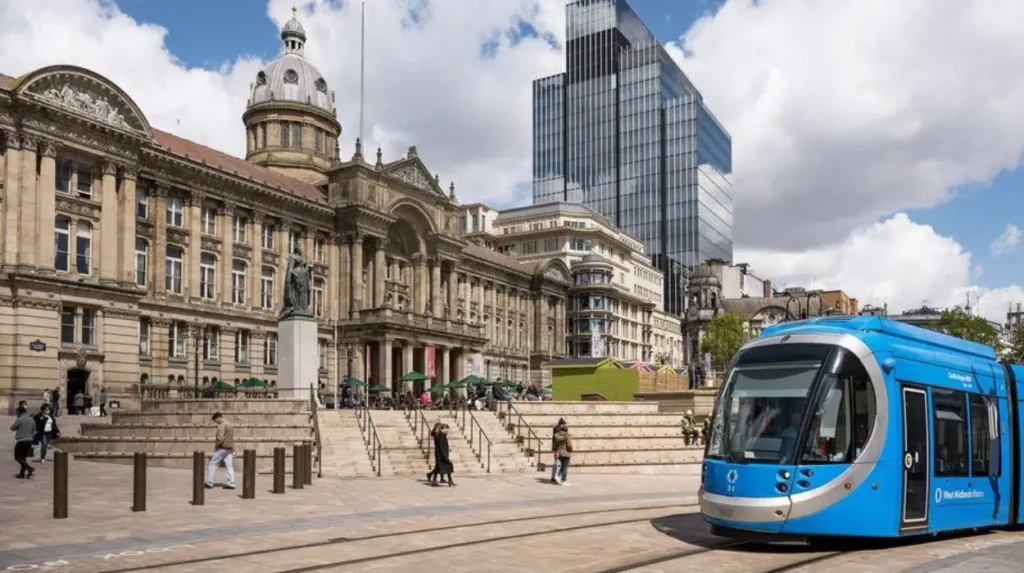
The West Midlands Metro is the region’s light rail and tram service.
Transport for West Midlands manages the Metro and works with regional transport operators to improve connections.
The tram network connects Birmingham with destinations including Wolverhampton, with routes serving areas such as West Bromwich, Wednesbury and Bilston.
TfWM reports tram frequencies of approximately every eight to ten minutes across the network, with additional services during peak periods. Actual frequencies depend on the route and operating timetable.
The Metro is useful for people living or working near its stops.
However, residents in neighbourhoods without direct tram access need to use buses, trains, cycling or private vehicles to complete their journeys.
Are Birmingham’s Bus Services Convenient?
Buses provide extensive coverage across Birmingham and the wider West Midlands.
They connect neighbourhoods that do not have direct access to railway stations or tram stops.
Important routes serve destinations such as:
- Birmingham city centre.
- Selly Oak and the university district.
- Edgbaston and Harborne.
- Erdington and Sutton Coldfield.
- Handsworth and Perry Barr.
- Kings Heath and Moseley.
Transport for West Midlands works with bus operators rather than directly operating all bus services.
Residents should check route changes, timetables, fares and service frequency before choosing accommodation based on public transport access.
Can Residents Travel Easily Between Birmingham and Other UK Cities?
Birmingham has strong national railway connections.
Birmingham New Street is the city’s principal railway station. Direct services connect Birmingham with destinations including London, Manchester, Liverpool, Bristol, Leicester and Nottingham.
National Rail lists a fastest journey time of approximately one hour and 16 minutes between Birmingham and London. Actual journey times depend on the train service and timetable.
Birmingham International also serves the airport and National Exhibition Centre.
These connections are useful for business travellers, commuters and residents who regularly visit other UK cities.
Will Transport Improvements Benefit Birmingham in 2027?
Transport infrastructure investment remains relevant to Birmingham’s long-term development.
Transport for West Midlands identifies planned Metro improvements, including the Birmingham Eastside extension. This project is intended to improve connections towards Digbeth and link the future HS2 Curzon Street station area with the Metro network.
Further regional extensions are also part of the wider transport development programme. Transport for West Midlands
These projects form part of the city’s longer-term infrastructure ambitions. Residents should distinguish planned developments from operational services when making commuting decisions for 2027.
Is Birmingham a Safe Place to Live?
Birmingham has neighbourhoods with different safety conditions, and crime levels vary across the city. Residents should examine local police statistics, street-level conditions, lighting, transport access and neighbourhood characteristics before selecting accommodation or deciding where to live.
Safety is an important part of residential decision-making.
Birmingham is a large metropolitan city, so crime experiences differ according to location, time and type of offence.
What Do Crime Statistics Say About Birmingham?
Police.uk publishes local crime information and comparisons for Birmingham and the wider West Midlands.
Its comparison data show that Birmingham recorded a crime rate of 28.4 per 1,000 population in the quarter ending March 2026. The corresponding West Midlands force-area figure was 25.11 per 1,000.
The Birmingham figure was lower than its March 2023 figure of 34.53 per 1,000, although crime rates increased compared with the corresponding quarter in 2025.
These figures provide useful context but do not establish that every Birmingham neighbourhood has the same safety conditions.
Different offences also affect residents in different ways.
What Should Residents Check Before Renting or Buying?
People considering a move should investigate the immediate surroundings of a property.
Important considerations include:
- Street lighting and visibility.
- Access to public transport.
- Pedestrian activity during the evening.
- Property security and entry arrangements.
- Nearby shops and community facilities.
- Local police crime maps and reported incidents.
Visiting a neighbourhood during both daytime and evening hours provides a better understanding of its residential environment.
Prospective tenants should also examine building security, communal entrances, parking facilities and the condition of surrounding streets.
Does Neighbourhood Choice Affect Residential Safety?
Yes. Residential conditions differ between individual streets and neighbourhoods.
People comparing accommodation in central Birmingham, Handsworth, Sparkhill, Edgbaston, Sutton Coldfield or Moseley should investigate the exact location rather than relying on broad area reputations.
Local crime information, property security and commuting arrangements provide more useful evidence than generalised claims about an entire district.
What Is Healthcare Like in Birmingham?
Birmingham has an extensive healthcare network supported by NHS hospitals, specialist medical centres, general practices and community healthcare providers. Residents benefit from major medical institutions, although access to appointments and particular treatments depends on local capacity and individual healthcare requirements.
Healthcare is an important advantage for people considering Birmingham as a permanent home.
The city has established hospitals and specialist medical services serving Birmingham and the wider West Midlands.
Which Are the Main Hospitals in Birmingham?
One of the city’s major healthcare institutions is Queen Elizabeth Hospital Birmingham.
Located in Edgbaston, Queen Elizabeth Hospital Birmingham is operated by University Hospitals Birmingham NHS Foundation Trust.
The hospital opened in June 2010 and provides specialist medical services. It is also designated as a Level 1 Major Trauma Centre, providing advanced emergency treatment for patients with serious injuries.
Other important healthcare institutions include:
- Birmingham Children’s Hospital – specialist healthcare for children and young people.
- Birmingham Women’s Hospital – maternity, women’s health and specialist services.
- City Hospital – hospital services within the Sandwell and West Birmingham NHS Trust.
- Good Hope Hospital – healthcare services for residents in north Birmingham and surrounding areas.
Are GP Services and Community Healthcare Available?
Birmingham has general practices, pharmacies, dental practices and community healthcare services.
General practitioners provide routine medical consultations, referrals and ongoing care. Pharmacies offer prescription services and advice on common health concerns.
Residents moving to Birmingham should register with a local GP practice after securing accommodation.
NHS service availability depends on practice capacity and local eligibility requirements. People should also check dental registration arrangements because NHS dental appointment availability differs between providers.
Is Birmingham Suitable for Older Residents?
Birmingham offers healthcare institutions, residential communities, pharmacies and public transport connections that support older residents.
Suburban areas such as Sutton Coldfield, Harborne and parts of Edgbaston provide access to established community facilities.
Older residents should consider proximity to healthcare providers, accessible housing, public transport, nearby family support and social activities when choosing a location.
What Lifestyle and Entertainment Can Residents Enjoy in Birmingham?
Birmingham offers a varied lifestyle through shopping centres, independent restaurants, music venues, theatres, museums, sporting facilities and green spaces. Its cultural diversity also creates access to international cuisines, community events and different forms of entertainment throughout the year.
Lifestyle is another important factor when evaluating Birmingham as a residential destination.
The city provides entertainment options for students, families, professionals and older residents.
What Shopping Facilities Are Available?
Birmingham has several major shopping destinations.
The Bullring and Grand Central form an important retail and commercial district in the city centre.
Residents can access fashion retailers, department stores, restaurants, cafés and everyday shopping facilities.
Other shopping destinations include:
- The Mailbox, known for retail, restaurants and leisure facilities.
- Grand Central, connected to Birmingham New Street.
- The Jewellery Quarter, with specialist retailers and independent businesses.
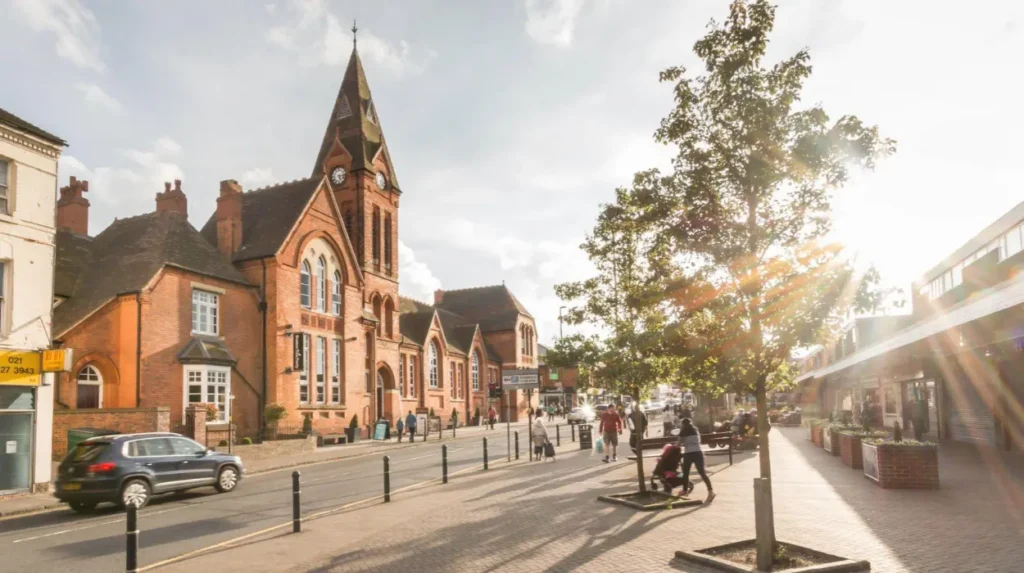
- High streets in Harborne, Moseley and Kings Heath.
- Resorts World Birmingham, near Birmingham International Airport and the NEC.
These destinations offer different shopping experiences, from large retail centres to independent local businesses.
Does Birmingham Have a Strong Food and Restaurant Scene?
Birmingham has an established food culture influenced by its diverse population.
The city is particularly recognised for its South Asian restaurants, traditional British food, independent cafés and international dining establishments.
The Balti Triangle is associated with Birmingham’s balti cuisine, a style of South Asian cooking served in traditional steel bowls.
Areas such as Sparkhill, Small Heath and Handsworth offer access to South Asian grocery stores, restaurants and bakeries.
The city centre and Jewellery Quarter provide additional restaurants, international dining options and independent cafés.
Food diversity is an important advantage for residents who value access to different cuisines and specialist food shops.
What Cultural Attractions Are Available?
Birmingham has established cultural institutions that contribute to its identity.
The Library of Birmingham is a major public library and cultural building located at Centenary Square.
Other notable attractions include:
Birmingham Museum and Art Gallery: A cultural institution with collections covering fine art, local history and decorative arts. Visitors should check current exhibitions and opening arrangements.
Symphony Hall: A major concert venue hosting classical music, orchestral performances and other live events.
Birmingham Hippodrome: A prominent theatre presenting musicals, dance, touring productions and entertainment.
Black Country Living Museum: Located in nearby Dudley, this open-air museum explores the industrial and social history of the wider Black Country.
National SEA LIFE Centre Birmingham: An aquarium attraction in the Brindleyplace area.
These attractions contribute to the city’s leisure and cultural environment.
Are There Good Parks and Outdoor Spaces?
Birmingham has substantial green spaces within its metropolitan boundaries.
Sutton Park is one of its most important natural attractions. The 2,400-acre National Nature Reserve includes woodland, heathland, lakes and wetlands.
Other popular outdoor destinations include Cannon Hill Park, Birmingham Botanical Gardens, Lickey Hills Country Park and Kings Heath Park.
Cannon Hill Park provides walking routes, landscaped gardens, recreational facilities and open spaces.
The Botanical Gardens in Edgbaston feature landscaped gardens and plant collections.
Lickey Hills Country Park offers woodland walks, open landscapes and views across the surrounding region.
These facilities provide opportunities for walking, cycling, outdoor exercise and family recreation.
What Are the Main Disadvantages of Living in Birmingham?
Birmingham offers substantial residential advantages, but residents also face employment competition, traffic congestion, uneven neighbourhood conditions, rising household expenses and pressure on public services. Understanding these disadvantages helps people make realistic decisions about housing, commuting and long-term relocation.
A balanced assessment of Birmingham must consider its economic and infrastructure challenges.
The city has a large population and extensive public-service requirements. These factors influence housing demand, transport networks and local authority spending.
Is Finding a Good Job Difficult in Birmingham?
Employment competition is one of the city’s important challenges.
Nomis recorded a 7.9% unemployment rate in Birmingham for July 2025 to June 2026, compared with 4.5% across Great Britain.
The employment rate was also below the national figure. Official Census and Labour Market Statistics+1
People entering the employment market should research vacancies before moving.
Applicants without professional experience or relevant qualifications can face additional competition.
Does Birmingham Have Traffic and Congestion Problems?
Road congestion affects major routes across Birmingham, particularly during peak commuting periods.
Traffic conditions are influenced by commuter journeys, commercial vehicles, roadworks and regional travel.
Residents travelling by car should consider access to motorways, parking availability and journey times.
Birmingham’s location provides access to major road connections, including the M5, M6, M40 and M42.
However, proximity to a motorway does not guarantee a quick journey during busy periods.
People working in the city centre should compare public transport and driving costs before selecting accommodation.
Are Household Expenses Increasing?
Housing costs are only one part of Birmingham’s affordability picture.
ONS figures show that average private rents increased to £1,112 in October 2026, representing a 3.4% annual increase.
This demonstrates that renting remains an important household expense even where average rents are below national levels.
Energy prices, council tax, groceries and transport also influence household budgets.
First-time buyers need to account for mortgage interest, deposits, legal costs, surveys and property maintenance.
Does Birmingham Face Local Government Challenges?
Birmingham City Council has experienced substantial financial and administrative difficulties.
The council’s financial position has affected its ability to manage services and respond to local needs.
However, the 2026/27 budget was approved in March 2026. Birmingham City Council announced an additional £130 million for frontline services, including £40 million for cleaner streets and further investment in local services.
This represents an important part of the city’s recovery and service-improvement programme.
Residents should monitor future council budgets, waste collection arrangements, road maintenance, library provision and other local services when evaluating long-term residential prospects.
Explore More Area Guide
Ready Steady Make It: New Bake Off Experience Opens at Bullring Birmingham 2026
How Can You Find Dog-Friendly Places and Follow Birmingham Pet Rules?
How Is Birmingham Expected to Develop by 2027 and Beyond?
Birmingham’s future residential appeal depends on employment growth, housing delivery, transport improvements, public-service recovery and investment in commercial districts. Existing universities, regional transport connections and economic diversity provide important foundations for continued development through 2027 and beyond.
Birmingham’s development is influenced by public investment, private businesses, infrastructure programmes and changes in population demand.
The city has a long industrial history and an established role in the national economy.
Its future growth depends on how effectively it uses these economic and institutional advantages.
Will Transport Investment Improve Birmingham?
Transport improvements remain an important part of the city’s development strategy.
The planned Birmingham Eastside Metro extension is designed to improve connections towards Digbeth and the Curzon Street station area.
The wider West Midlands Metro development programme also includes a proposed extension towards Dudley and Brierley Hill.
Transport for West Midlands reported approximately £1.3 billion in planned Metro investment over a ten-year period in its October 2026 project information.
These developments are relevant to residents considering future commuting patterns.
However, construction schedules, operational opening dates and final service arrangements should be checked through official project announcements.
Will Birmingham Remain Attractive to Businesses?
Birmingham has several advantages for businesses.
Its central location provides access to regional markets and national transport connections.
The city also has universities, a large working-age population and established professional services and manufacturing sectors.
Business districts such as Colmore Business District, Brindleyplace and the city centre provide office accommodation and commercial facilities.
The wider West Midlands also supports manufacturing, automotive production, logistics and engineering.
The long-term success of these sectors depends on business investment, workforce skills, infrastructure and economic conditions.
What Role Will Universities Play in Future Growth?
Universities contribute to Birmingham’s economic development through education, research, innovation and graduate employment.
They attract students and academic professionals while maintaining links with employers and research organisations.
The University of Birmingham, Aston University and Birmingham City University are important institutions in this wider educational network.
Their presence supports demand for student accommodation, professional services, hospitality and local businesses.
Graduate retention and employment opportunities remain important factors in determining how much economic value the city gains from its higher education sector.
Will Birmingham’s Population Influence Housing Demand?
The ONS estimated Birmingham’s population at approximately 1.177 million in mid-2025. Official Census and Labour Market Statistics+1
Population levels influence demand for housing, schools, healthcare and transport.
Household formation, migration, employment and housing construction all affect residential demand.
For people considering property purchases in 2027, the important factors include local housing supply, property condition, affordability and access to employment.
Population size alone does not guarantee property price growth.
A careful assessment of individual neighbourhoods provides a more reliable basis for residential and investment decisions.
Should You Move to Birmingham in 2027?
Birmingham is worth considering in 2027 for people seeking comparatively affordable housing, established educational institutions, regional employment opportunities and diverse neighbourhoods. The final decision should depend on household finances, employment prospects, commuting arrangements and individual residential priorities.
Birmingham provides a combination of urban opportunities and established residential communities.
Its housing market offers different property options, while its universities, hospitals, shopping districts and cultural attractions support a substantial population.
The city also has challenges. Employment statistics show a weaker labour market than the national average. Crime conditions differ between neighbourhoods, and public services require continued investment.
For families, Harborne, Sutton Coldfield and Edgbaston offer established residential environments worth investigating.
For students, Selly Oak, Edgbaston and central Birmingham provide access to higher education institutions.
For young professionals, the Jewellery Quarter, Digbeth and the city centre offer access to commercial districts, restaurants and entertainment.
For people prioritising independent businesses and community facilities, Moseley and Kings Heath provide additional residential choices.
Overall, Birmingham is a good place to live in 2027 for residents who value housing choice, cultural diversity, education and access to a major regional economy. Selecting the right neighbourhood and securing suitable employment remain the most important factors for a successful move.
Is Birmingham a good place to live in 2027?
Yes, Birmingham is a good place to live in 2027 for people seeking comparatively affordable housing, employment opportunities, universities, diverse communities and cultural attractions. The best experience depends on choosing a suitable neighbourhood and having a realistic household budget.