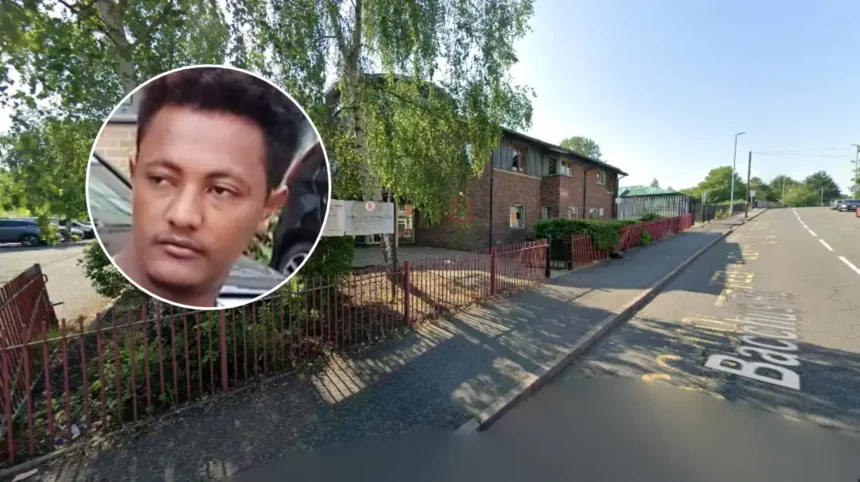
Key Points
- A jury at Birmingham Crown Court found Momodou Johm, 39, of Lodge Causeway, Bristol, guilty of murder.
- Adisu Chala, 27, also referred to in court reports as Adis Chala, died at the scene on Mott Street in Hockley, Birmingham, on Monday, 20 April 2026.
- Johm was driving a white BMW that clipped Mr Chala’s leg before he reversed over the 27-year-old twice and drove away.
- Emergency crews were called at 12:41am and reached the scene within three minutes, but paramedics could not save Mr Chala.
- Officers found the abandoned white BMW nearby early the next morning, on Tuesday, 21 April 2026.
- Prosecutor Sally Howes KC told the court that Johm turned the car from a mode of transport into a lethal weapon.
Birmingham (Birmingham Express) November 14, 2026 – Momodou Johm, aged 39, of Lodge Causeway, Bristol, was found guilty of killing Adisu Chala, also spelled Adis Chala, during the early hours of Monday, 20 April 2026.
- Key Points
- How did emergency services and investigators respond to the incident?
- What did prosecutors say during the Birmingham Crown Court trial?
- What tribute did Adisu Chala’s family pay following his death?
- What is the background of this legal case?
- What is the prediction for sentencing and road-crime prosecutions?
According to details released by West Midlands Police, Mr Chala had been out with friends in Birmingham when a white BMW clipped his leg as he walked along Mott Street in Hockley.
As reported by Nahida Ashraf of The Daily Dazzling Dawn, Prosecutor Sally Howes KC told the jury that the fatal sequence lasted only a few seconds, during which the car repeatedly stopped, reversed, and weaved from side to side rather than travelling in a straight line.
Mr Chala pursued the vehicle on foot and, despite a friend attempting to hold him back, punched and kicked the bodywork and the driver’s window.
West Midlands Police confirmed that Johm then reversed the BMW, knocking Mr Chala to the ground, before driving forward and reversing over him a second time.
As reported by Nahida Ashraf of The Daily Dazzling Dawn, the inertia from the second impact dragged Mr Chala several yards and rolled him over at speed before Johm reversed down Mott Street into Great Hampton Row to flee the area.
How did emergency services and investigators respond to the incident?
Emergency services were alerted at 12:41am on Monday, 20 April 2026, and West Midlands Police officers arrived at Mott Street by 12:44am, where they found Mr Chala unresponsive in the roadway.
Despite sustained resuscitation efforts by paramedics and medics at the scene, Mr Chala had suffered catastrophic injuries and was pronounced dead shortly after the incident.
Officers launched a homicide investigation and located the white BMW abandoned nearby, recovering the vehicle for forensic examination early on Tuesday, 21 April 2026.
Detectives swiftly identified Johm as the suspect and charged him with murder, remanding him to appear before Birmingham Magistrates’ Court on Thursday, 23 April 2026.
What did prosecutors say during the Birmingham Crown Court trial?
The murder trial opened at Birmingham Crown Court on Tuesday, 27 October 2026, where the Crown argued that Johm’s manoeuvres behind the wheel demonstrated a clear intention to cause really serious harm.
As reported by Nahida Ashraf of The Daily Dazzling Dawn, Prosecutor Sally Howes KC stated that “It was over within a few seconds but within that few seconds, the car was transformed from a mode of transport into a lethal weapon.”
Ms Howes further emphasised to the court that Johm failed to render assistance or alert authorities after striking the victim twice.
As reported by Nahida Ashraf of The Daily Dazzling Dawn, Ms Howes added that “He didn’t stop, he didn’t summon help, he drove away. This was not an accident. This running down was deliberate.”
What tribute did Adisu Chala’s family pay following his death?
Following the murder charge in April 2026, the family of Mr Chala released a public statement through West Midlands Police describing the devastating impact of his loss.
As reported by Molly Hookings of Hits Radio Birmingham, the family stated that “Adisu was the youngest member of our family, deeply loved and cherished by all of us. He was a kind, respectful, and valued person whose presence touched the lives of many.”
As reported by Hannah Price of UK News in Pictures, Mr Chala’s relatives also expressed their determination to see accountability through the courts, stating that “No parent, nor any brother or sister, should ever have to bury a loved one so young. We want justice for what happened.”
What is the background of this legal case?
Under English criminal law, a conviction for murder requires the prosecution to prove beyond reasonable doubt that the defendant unlawfully killed another person with the intention either to kill or to cause grievous bodily harm (really serious harm).
When a motor vehicle is used in a fatal incident, prosecutors must distinguish between offences under the Road Traffic Act—such as causing death by dangerous driving—and common law murder.
In this case, the Crown Prosecution Service relied on the sequence of deliberate vehicular movements—specifically reversing into Mr Chala, driving forward, and reversing over him a second time—to establish that the car was used intentionally as a weapon rather than involved in a negligent collision.
What is the prediction for sentencing and road-crime prosecutions?
Following his conviction for murder at Birmingham Crown Court, Momodou Johm faces a mandatory life sentence, with a judge set to determine the minimum term he must serve in custody before becoming eligible to apply for parole.
Under Schedule 21 of the Sentencing Act 2020, the use of a weapon—which English courts recognise as including a motor vehicle driven deliberately at a victim—serves as a statutory factor when calculating the starting point for a minimum custodial tariff.
For motorists, pedestrians, and legal practitioners across Birmingham and the wider West Midlands, the verdict reinforces that retaliatory or deliberate use of a vehicle during street altercations will be prosecuted as homicide rather than a motoring offence, carrying the most severe custodial penalties available under United Kingdom law.