Key Points
- West Midlands Police made multiple arrests following fireworks disorder in Birmingham city centre over Halloween and Bonfire Night.
- Pedestrians fled along New Street, Corporation Street, and Bagot Street as fireworks were thrown at crowds, buildings, and emergency vehicles.
- Officers used Section 60 powers under the Criminal Justice and Public Order Act to stop and search people without reasonable suspicion.
- Ground patrols and drone units recovered lighters and discarded pyrotechnics, detaining suspects near Dale End and Staniforth Street.
- Those arrested range in age from 15 to 28 on suspicion of public disorder, weapon possession, and illegally setting off fireworks.
Birmingham (Birmingham Express) November 10, 2026 — Terrified shoppers and revelers were forced to flee for safety after groups of youths hurled live fireworks down crowded thoroughfares in Birmingham city centre over the Halloween and Bonfire Night period. West Midlands Police deployed officers alongside specialist drone units to restore order and detain suspects across multiple high-footfall areas.
- Key Points
- What happened during the Birmingham city centre firework disorder?
- How did West Midlands Police respond to the public safety threat?
- What were the quotes from police officials regarding the anti-social behavior?
- Background of Firework-Related Public Disorder in Urban Centres
- Prediction: How This Development Can Affect City Centre Retailers, Residents, and Local Visitors
What happened during the Birmingham city centre firework disorder?
As reported by Stephanie Balloo of BirminghamLive, chaotic scenes unfolded along New Street as pyrotechnics were repeatedly directed at members of the public and police vehicles. Hundreds of young people were captured on social media footage screaming and rushing away as explosions detonated near commercial storefronts and street crossings.
As reported by Stephanie Balloo of BirminghamLive, West Midlands Police confirmed that “Seven people – aged between 15 and 26 – have been arrested. The offences range from assault, possession of an offensive weapon and possession of fireworks.” Emergency services established cordons around major thoroughfares including Stephenson Street, Corporation Street, and Muntz Street.
How did West Midlands Police respond to the public safety threat?
As reported by Gavin Rutter of Downtown Country, West Midlands Police launched a targeted overnight operation to suppress firework misuse near key retail centers and student accommodation hubs. Officers on the ground, supported by drone units, monitored hot spots near Bagot Street, Staniforth Street, and Dale End.
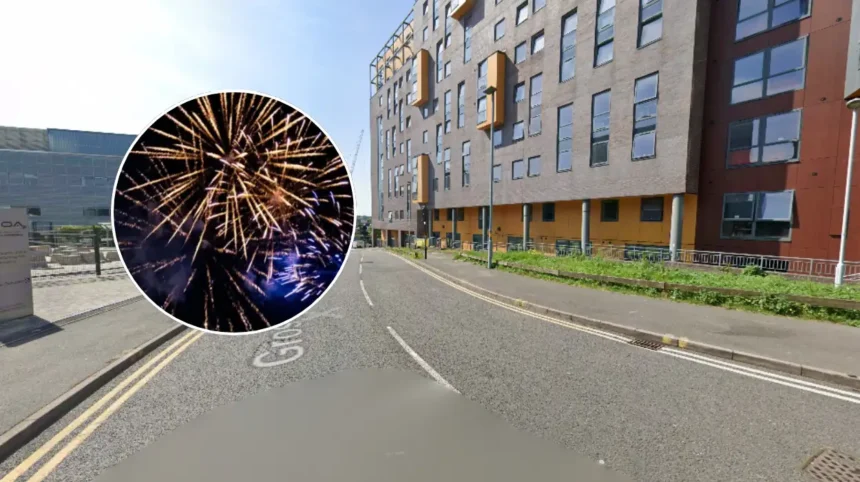
West Midlands Police stated that “We were alerted to fireworks being set off from a building on Dale End, and officers swiftly attended. Along with support from our Drones, officers on the ground carried out quick-time enquiries and detained two men. Discarded fireworks and a lighter were recovered, and the two men, aged 26 and 28, were arrested on suspicion of illegally throwing fireworks in a public place.”
To contain further outbreaks of violence, senior officers implemented urgent emergency measures across central districts. As reported by West Midlands Police News, the force verified that “The section 60 powers will be in place until 8am this morning… This will allow us to stop and search people without the need to have reasonable grounds.”
What were the quotes from police officials regarding the anti-social behavior?
Police leaders reiterated that dangerous pyrotechnic misuse will be met with criminal prosecution.
West Midlands Police declared that “We won’t tolerate such appalling behaviour which we know is frightening for people and puts them at risk of harm. The safety of our communities is paramount, and we’ll do all we can to ensure this.”
West Midlands Police added that “Misusing fireworks is not only dangerous: it’s illegal. Throwing fireworks in public places, targeting people or property, or causing distress can lead to fines, arrest and criminal charges.”
Background of Firework-Related Public Disorder in Urban Centres
Public safety issues linked to the misuse of consumer fireworks in urban spaces during Autumn celebrations have prompted escalating concern across the United Kingdom.
In recent years, metropolitan areas such as Birmingham, Manchester, and London have experienced repeated seasonal spikes in anti-social behaviour where high-powered pyrotechnics are weaponised in pedestrian zones.
Disturbances around universities and retail districts have previously led local authorities and emergency services to deploy high-visibility patrols, establish public dispersal zones, and utilize temporary Section 60 stop-and-search legislation.
Despite existing statutory restrictions under the Fireworks Regulations 2004—which prohibit the detonation of fireworks in public streets between 11:00 PM and 7:00 AM—unauthorised usage in city centres remains an ongoing enforcement challenge for urban police forces during late October and early November.
Prediction: How This Development Can Affect City Centre Retailers, Residents, and Local Visitors
The continuation of public firework disorder and the subsequent intensification of police interventions are expected to impact several key groups within the city centre ecosystem:
- Retailers and Hospitality Businesses: High-street businesses operating during late-evening hours, particularly around New Street and early seasonal Christmas markets, face potential footfall declines if safety concerns deter visitors. Increased security presence and emergency cordons may temporarily disrupt access to venues during peak shopping periods.
- Local Residents and Student Communities: Residents residing in central apartment complexes and student accommodation near Staniforth Street and Bagot Street face elevated safety risks and noise disturbance. Continued incidents may lead residential groups to lobby for stricter structural security measures and enhanced local ward policing.
- General Visitors and Commuters: Members of the public navigating central transport corridors during seasonal festivities will experience heightened police monitoring. The ongoing execution of Section 60 stop-and-search orders means pedestrians may encounter routine police interactions aimed at preventing weapon and pyrotechnic possession in public zones.