Key Points
- Fireworks were directed at public spaces, property, and emergency workers across Birmingham city centre and Bagot Street in Aston during Bonfire Night.
- West Midlands Police enacted emergency Section 60 and Section 60AA orders, allowing officers to search individuals without reasonable suspicion and require the removal of face coverings.
- Officers made five overnight arrests for public order offences, failure to disperse, possessing fireworks, and assaulting police.
- Birmingham Council leader Councillor Roger Harmer said the disturbances left parts of the city centre looking like a “warzone”.
- High-visibility police patrols and emergency stop-and-search powers will stay in place through the weekend.
Birmingham (Birmingham Express) November 6, 2026 – West Midlands Police deployed emergency public order measures and made multiple arrests overnight following widespread disturbances involving fireworks that left areas of Birmingham city centre and Aston resembling “almost a warzone.”
What Caused the Emergency Police Intervention in Birmingham City Centre?
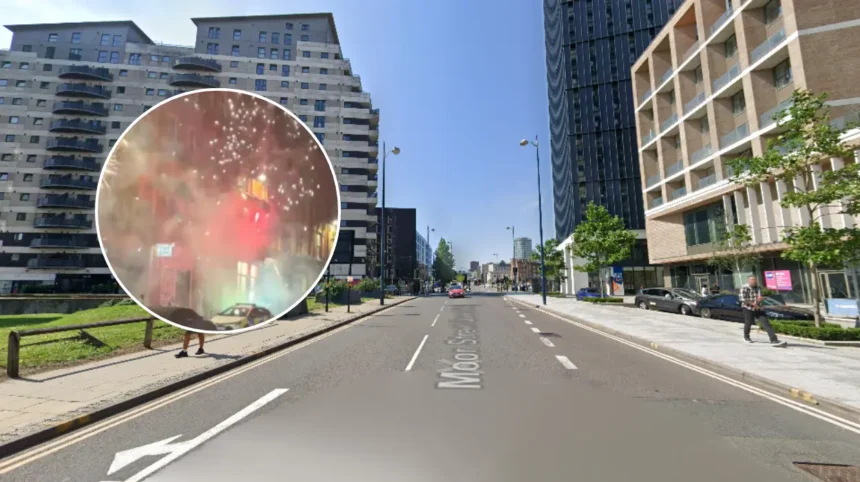
As reported by Harry Leach of BirminghamLive, police forces flooded Birmingham city centre and surrounding districts on November 5 after groups of youths directed fireworks dangerously towards public spaces, property, and attending emergency personnel. The disturbances escalated rapidly in the Bagot Street precinct in Aston during the early hours of November 6.
To regain control of affected thoroughfares, police commanders enacted Section 60 powers alongside Section 60AA orders across designated zones. These temporary legal provisions granted uniformed officers blanket authority to search individuals without prior reasonable suspicion and required members of groups to remove face coverings.
As reported by Amelia Salmons of Hits Radio, police operations led to five specific arrests during the night. Two teenage boys were detained for public order violations and failing to adhere to dispersal directions, while a third individual was arrested for illegal possession of fireworks. Officers deployed to secondary disturbances near Bagot Street arrested two additional individuals, aged 21 and 22, on suspicion of assaulting police officers.
As reported by Harry Leach of BirminghamLive, Birmingham Police Commander Chief Superintendent Tom Joyce stated:
“This kind of behaviour is irresponsible and dangerous, and misusing fireworks is against the law. If you are misusing fireworks, you can expect to be dealt with and prosecuted, and if you’re gathering to watch this kind of behaviour, you’re putting yourself at risk of injury.”
Chief Superintendent Joyce further clarified the operational posture of the force:
“Our priority is the safety of the public, and we will continue to use all the appropriate powers and resources at our disposal to protect people and prevent crime and disorder. As part of our continuing operation tonight and over the weekend, you can expect to see more officers on duty, carrying out high-visibility patrols and ready to respond quickly in key locations.”
How Are Local Authorities and Residents Responding to the Street Disturbances?
As reported by Birmingham-Now, civic leaders expressed deep concern over the scale of anti-social behavior during the Bonfire Night period. Birmingham Council leader Councillor Roger Harmer noted that scenes reported in central corridors resembled a “warzone,” urging residents to report any dangerous street activity immediately.
As reported by Birmingham-Now, Councillor Roger Harmer stated:
“If any resident sees fireworks out on the street, the first thing to do straight away is call 999 and ask the police to intervene.”
Police authorities reiterated that deliberate misuse of pyrotechnics in public streets carries strict criminal penalties. A spokesperson for West Midlands Police emphasized:
“We won’t tolerate such appalling behaviour which we know is frightening for people and puts them at risk of harm. The safety of our communities is paramount, and we’ll do all we can to ensure this. Misusing fireworks is not only dangerous: it’s illegal. Throwing fireworks in public places, targeting people or property, or causing distress can lead to fines, arrest and criminal charges.”
The public order operations follow a series of similar interventions earlier in the week. On Halloween night, police conducted dispersal operations in the city centre following firework-related anti-social incidents that resulted in seven arrests.
Background of the Particular Development
Street disorder associated with fireworks around late October and early November has become an escalating operational challenge for West Midlands Police in recent years. Similar street clashes occurred during the 2025 Bonfire Night period, during which nine individuals were arrested after fireworks were directed at police officers and members of the public in areas such as Bordesley Green and Aston.
In response to historic trends, West Midlands Police and partner agencies—including Birmingham City Council, local university accommodation providers, and the West Midlands Fire Service—launched a preventative zero-tolerance strategy in October 2026.
Ahead of the 2026 Bonfire Night period, Chief Inspector Dan Lowe of the force’s Operations Unit confirmed that pre-planned high-visibility patrols and legal dispersal zones would be instituted to prevent a repetition of prior unrest.
Despite these advanced measures, localized groups continued to use consumer-grade fireworks as weapons in dense urban areas, prompting the emergency deployment of enhanced search and unmasking powers.
Prediction: How This Development Can Affect Local Residents and Businesses
The enforcement of Section 60 orders and high-visibility police operations will directly impact residents, students, and businesses in Birmingham city centre and Aston over the coming days.
- Increased Stop-and-Search Activity: Pedestrians navigating central Birmingham and the Bagot Street corridor should anticipate increased police interactions, routine stops, and requests to remove face coverings under active Section 60AA directives.
- Local Business Disruptions: Commercial premises and late-night hospitality venues in areas affected by dispersal orders may experience reduced footfall or temporary access restrictions during active enforcement windows.
- Tighter Regulatory Scrutiny on Pyrotechnics: Repeated street disorder is likely to intensify calls from local council leaders and community groups for stricter controls on the retail sale of fireworks to the general public across the West Midlands.
- University and Housing Directives: Students living in major residential blocks in Aston are expected to face strict disciplinary reviews from university housing authorities if identified in police footage or dispersal records.