Key Points
- Ako Azizpour, 27, died on 8 February 2024 when two-tonne glass crates crushed him at UK Superior Glass on Tyburn Road in Erdington.
- Birmingham Crown Court sentenced Nashwan Amin, 29, after his conviction for gross negligence manslaughter and perverting the course of justice.
- His brother, Razwan Amin, 27, received a custodial sentence after pleading guilty to perverting the course of justice.
- West Midlands Police and the Health and Safety Executive found that workers unloaded 11 crates weighing over 24,000 kilograms without a specialized crane or rated forklift.
- Inspectors found no written health and safety policies, risk assessments, or employee training records at the company.
- Both brothers tried to mislead investigating officers after the death, resulting in their convictions for perverting the course of justice.
Erdington (Birmingham Express) November 4, 2026 – Two brothers have been jailed following a lengthy legal process into the workplace death of a 27-year-old man who was crushed under heavy glass crates at an industrial premises in the West Midlands.
- Key Points
- What Led to the Fatal Crushing Incident at the Erdington Industrial Unit?
- What Did the Health and Safety Investigation Uncover?
- How Were the Defendants Sentenced at Birmingham Crown Court?
- Background of the Particular Development
- Prediction: How This Development Can Affect Industrial Employers and Workplace Safety Standards
The court proceeding concluded at Birmingham Crown Court, where judge and jury heard how a total lack of safety equipment and training led directly to the fatal crushing incident.
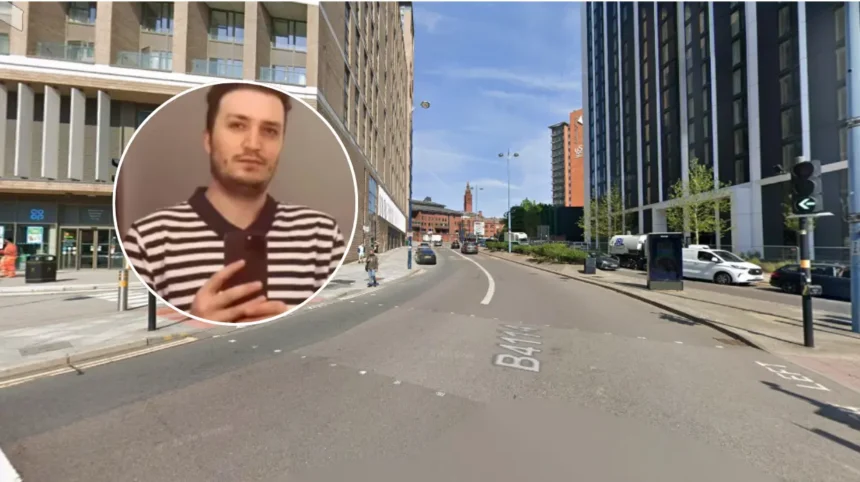
Emergency responders attended the business premises on Tyburn Road in Erdington on 8 February 2024 following urgent calls regarding an injured worker trapped inside a freight container.
Despite rapid intervention by emergency crews, Ako Azizpour sustained catastrophic crushing injuries and was pronounced dead at the scene.
What Led to the Fatal Crushing Incident at the Erdington Industrial Unit?
As reported by ITV News Central, the victim, Ako Azizpour, was attempting to unload large glass shipments when the fatal incident occurred.
The delivery comprised 11 large crates with a total combined weight exceeding 24,000 kilograms, with individual crates weighing more than two tonnes each.
As reported by West Midlands Police, the business lacked the essential heavy equipment—specifically specialized cranes or suitably rated forklifts—required to safely offload industrial glass consignments of that magnitude.
Consequently, workers were exposed to extreme structural hazards while attempting manual or improvised offloading within the confined space of a shipping container.
“He went to work expecting to be safe, but instead lost his life due to an appalling lack of basic safety measures and an complete disregard for human life.” — West Midlands Police Investigating Team
What Did the Health and Safety Investigation Uncover?
As reported by Birmingham Live, a joint investigation conducted by West Midlands Police and the Health and Safety Executive (HSE) highlighted systematic operational failures at the site.
Investigators found no written health and safety policies, no risk assessments, and no formal employee training documentation.
The business owner, Nashwan Amin, operated the facility with what prosecutors described as a complete neglect of statutory duty.
Furthermore, officers discovered that the brothers actively attempted to deceive investigating officers in the immediate aftermath, leading to charges of perverting the course of justice.
How Were the Defendants Sentenced at Birmingham Crown Court?
Following a five-week trial at Birmingham Crown Court, 29-year-old Nashwan Amin, of Garrard Gardens, Sutton Coldfield, was found guilty of gross negligence manslaughter and perverting the course of justice.
His brother, 27-year-old Razwan Amin, of Wildmoor Close, Stirchley, had previously entered a guilty plea to perverting the course of justice prior to the commencement of the trial.
Both men received immediate custodial sentences at Birmingham Crown Court for their respective roles in the tragedy and subsequent cover-up.
“It remains difficult to believe we have lost our son. We demanded justice over his death, and no sentence can ever replace the loss of Ako.” — Statement from the Family of Ako Azizpour
Background of the Particular Development
The prosecution of corporate entities and individual business directors for workplace fatalities in the United Kingdom falls under strict regulations established by the Health and Safety at Work etc. Act 1974 and the Corporate Manslaughter and Corporate Homicide Act 2007.
Over recent years, law enforcement authorities across the West Midlands have worked in close coordination with the Health and Safety Executive to bring criminal charges against business executives whose failure to provide adequate safe systems of work results in death or life-altering injuries.
Gross negligence manslaughter charges against individual employers remain relatively rare and carry high legal thresholds, requiring prosecutors to demonstrate that a duty of care was breached in a manner so exceptionally bad as to amount to a criminal act or omission.
The investigation into UK Superior Glass highlights an increasing trend by police services to treat serious workplace safety breaches accompanied by acts of deception as major crime scenes rather than standard administrative regulatory breaches.
Prediction: How This Development Can Affect Industrial Employers and Workplace Safety Standards
This landmark prosecution and conviction send a unambiguous signal across the UK manufacturing, logistics, and industrial sectors regarding personal criminal liability for business leaders.
- Increased Executive Accountability: Company directors, site managers, and business owners will face heightened personal scrutiny. The custodial sentences demonstrate that courts are willing to enforce severe prison terms where gross negligence leads to workplace deaths.
- Tighter Equipment and Offloading Compliance: Freight handling firms and logistics operators will likely institute stricter verification protocols before dispatching heavy loads, ensuring receiving facilities possess the certified cranes and forklifts required for offloading.
- Zero Tolerance for Deception: The inclusion of convictions for perverting the course of justice serves as a stark warning to site operators that attempting to alter evidence or mislead HSE and police investigators will result in mandatory custodial add-ons.
- Insurance and Regulatory Audit Pressures: Commercial insurers are anticipated to raise underwriting requirements for small-to-medium industrial enterprises, demanding documented proof of employee training, risk assessments, and machinery safety maintenance before granting liability coverage.