Key Points
- Birmingham rape support charity Rape and Sexual Violence Project (RSVP) released a statement following a civil lawsuit over an alleged 2024 gang rape at Cornell University in the United States.
- A former student, filing as Jane Doe, sued Cornell University and seven former Chi Phi fraternity members in September 2026, alleging she was drugged with ketamine and assaulted for several hours.
- RSVP Chief Executive Officer Lisa Thompson offered support to the survivor and warned that public coverage of campus violence can re-traumatise victims globally while showing failures in bystander intervention and institutional accountability.
- Following student protests, New York Governor Kathy Hochul named State Attorney General Letitia James as special prosecutor, and the Tompkins County District Attorney’s Office reopened its criminal investigation.
- Cornell President Michael I. Kotlikoff confirmed the university expelled two individuals over the allegations, and former Deputy U.S. Attorney General Sally Yates will lead an independent review of university procedures.
Birmingham (Birmingham Express) October 10, 2026 – A prominent Birmingham charity supporting survivors of sexual violence has issued a public warning regarding the wider societal impact of the high-profile Cornell University sexual assault case in the United States, cautioning that institutional failures and public developments risk re-traumatising victims internationally.
- Key Points
- What concerns were raised by the Birmingham support charity?
- What are the central allegations in the Cornell University lawsuit?
- How have law enforcement agencies and state officials reacted?
- How has Cornell University responded to the allegations and sanctions?
- Background of the particular development
- Prediction: How this development can affect higher education institutions and survivor support networks
What concerns were raised by the Birmingham support charity?
As reported by Birmingham Now, Lisa Thompson, Chief Executive Officer of the Birmingham-based charity Rape and Sexual Violence Project (RSVP), stated that her primary concern remains with the survivor, ensuring that the victim’s personal experience remains at the core of public debate.
Addressing the broader context of the news coming out of the Ivy League institution, Thompson noted that the situation highlights serious recurring issues surrounding misogyny, bystander behaviour, and how large educational institutions handle allegations of sexual violence. Thompson stressed that high-profile coverage of protracted legal battles and police inaction can severely impact survivors elsewhere who are deciding whether to seek help or report crimes.
What are the central allegations in the Cornell University lawsuit?
As reported by Lucia I. Suarez Sang of CBS News, a civil lawsuit was filed in September 2026 by a former Cornell student, referred to as Jane Doe, against Cornell University, seven former Chi Phi fraternity members, and affiliated organisations.
According to the legal complaint filed by her attorney, Thomas Giuffra, the plaintiff alleges that on 19 October 2024, she was coerced into consuming ketamine before being sexually assaulted by multiple men over a five-hour period at the Chi Phi fraternity house in Ithaca, New York. The complaint alleges that crude messages were distributed in a fraternity group chat suggesting a woman was available upstairs.
As reported by Cereese Qusba of The Cornell Daily Sun, the named defendants in the civil action include Matthew Ingalls, Johnathan Newell, Winston Lee, Gillio Lopes, Diego Sarabia, Scott Norris, and Scott Kretzschmar.
In a public statement provided to The Cornell Daily Sun, Jane Doe stated: “What happened to me was horrific and deeply disturbing. Almost two years later, I still carry the weight of its impact every day and night.”
How have law enforcement agencies and state officials reacted?
As reported by CBS News, no criminal arrests were made at the time of the initial reports in late 2024. Attorney Thomas Giuffra stated to CBS News: “Not one of these guys was arrested. Not one.
That I can tell you for a fact.” Giuffra added that following Jane Doe’s initial report to campus police three weeks after the alleged incident, investigators from the Tompkins County District Attorney’s Office failed to conduct adequate follow-up interviews.
However, on 28 September 2026, Tompkins County District Attorney Matthew Van Houten confirmed that his office was reopening the criminal investigation following community pressure, noting differences between sworn statements provided in late 2024 and the assertions inside the civil lawsuit.
As reported by CBS News, New York Governor Kathy Hochul subsequently signed an executive order on 1 October 2026 appointing New York Attorney General Letitia James as a special prosecutor.
Governor Hochul stated that Attorney General James will “investigate the incident and, if warranted, prosecute any offenses arising from the investigation and present evidence to a grand jury.”
How has Cornell University responded to the allegations and sanctions?
As reported by CBS News, Cornell University issued formal statements disputing claims that those involved received insufficient penalties. While early public reports suggested some students merely received writing assignments, the university clarified its internal Title IX process.
According to official remarks made by Cornell President Michael I. Kotlikoff during a meeting with student representatives, two of the accused were expelled from the university, two received multi-semester suspensions, one had graduated prior to the conclusion of proceedings, and two were cleared of sexual misconduct charges.
Furthermore, as reported by CBS News, Governor Hochul confirmed that Cornell University agreed to undergo an independent review. On 6 October 2026, Cornell appointed former Deputy U.S. Attorney General Sally Yates to oversee an overarching investigation into the university’s handling of sexual misconduct procedures and reports. The Chi Phi fraternity chapter involved was formally closed in late 2024 and remains barred from operating on campus.
Defence representatives have urged against premature judgment. As reported by CBS News, Andrew Miltenberg, legal counsel representing defendant Gillio Lopes, stated: “These are serious accusations, but accusations are not proof. Mr. Lopes should be judged on the evidence, not prejudged based on allegations made in a lawsuit or repeated in the media. We will address these issues through the appropriate legal process.”
Background of the particular development
The legal escalation in autumn 2026 follows nearly two years of ongoing tension between student safety advocates, university administrators, and local law enforcement. The alleged assault occurred in October 2024 and was first formally notified to the campus community via a crime alert in November 2024.
Internal disciplinary reviews were conducted under federal Title IX frameworks, resulting in the eventual permanent revocation of the Chi Phi fraternity’s recognition. However, the absence of state criminal indictments during the initial 2024–2025 period led to persistent criticism from local advocacy groups.
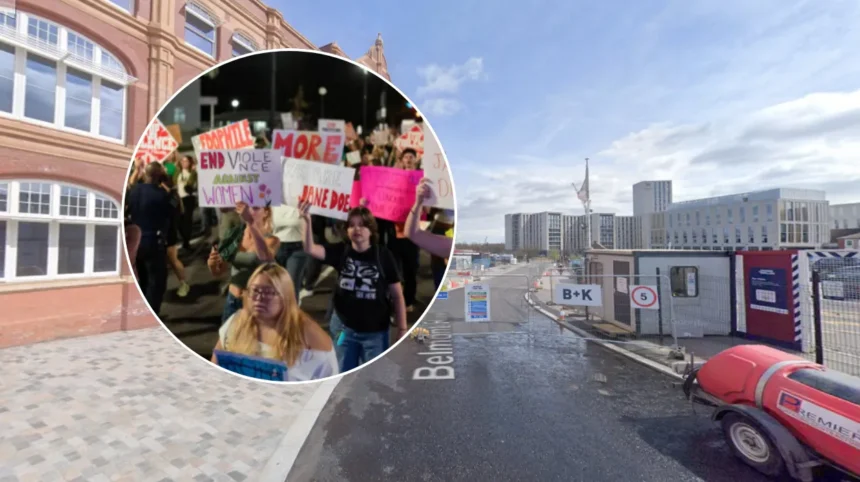
The filing of the multi-party civil lawsuit in September 2026 brought previously confidential fraternity communications and internal university documentation into the public domain.This triggered widespread student demonstrations, including a seven-hour sit-in on campus and rallies involving hundreds of protestors. The intense public reaction prompted state-level intervention, culminating in the appointment of a special prosecutor and an independent evaluation of university protocols.
Prediction: How this development can affect higher education institutions and survivor support networks
This development is expected to have far-reaching structural effects on higher education governance, campus law enforcement collaboration, and third-sector support services across both the United States and international jurisdictions.
For higher education institutions and university administrators, the involvement of state attorneys general and independent federal prosecutors sets a precedent that internal Title IX investigations may face direct state oversight if criminal referrals are deemed insufficient. Universities are likely to re-evaluate their policies regarding fraternity regulation, bystander intervention training, and alcohol/substance protocols to mitigate legal liability and safeguard student welfare.
For legal bodies and campus police departments, the reopening of the case highlights increased scrutiny over how initial survivor disclosures are documented. Jurisdictions may be compelled to review handling procedures for trauma-informed interviewing and cross-agency communication between campus safety officers and local prosecutors.
For support charities such as Birmingham’s RSVP and similar non-governmental organisations, the case is likely to drive an increase in demand for confidential support services. High-profile coverage often encourages other survivors to come forward, whilst simultaneously requiring support networks to expand resources to address public anxiety surrounding institutional handling of sexual violence.