Key Points
- Planning committees approved proposals to turn a high street commercial property into an adult gaming centre despite local objections.
- Public health officials and local councillors submitted formal warnings about risks of social harm, financial exploitation, and health problems linked to 24-hour gambling venues.
- West Midlands Police raised concerns that late-night gambling hubs could lead to more crime, anti-social behaviour, and public nuisance.
- Venue operators said the site complies with national licensing rules and pledged safeguarding measures including age-verification protocols and staff training.
- Planning officers told committee members that national planning and licensing rules require specific legal grounds to refuse an application based on socio-economic impact or venue concentration.
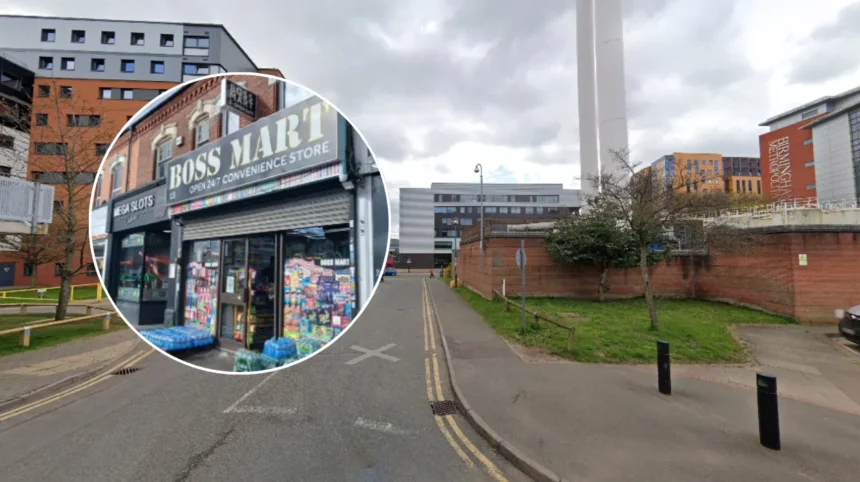
Birmingham (Birmingham Express) October 8, 2026 – Birmingham planning authorities have officially granted approval for a new adult gaming centre premises on the high street, electing to pass the proposals despite direct warnings from local ward councillors, public health authorities, and community representatives regarding the risk of social harm.
As reported by Christian Barnett, Local Democracy Reporter for Birmingham Live, public health officials submitted formal representations warning that extending round-the-clock gambling access on busy district high streets creates significant risks of gambling-related harm and financial distress among vulnerable residents.
Simultaneously, West Midlands Police submitted concerns highlighting that late-night commercial venues open 24 hours a day frequently correlate with elevated rates of anti-social behaviour and place additional demands on local policing resources.
Despite these representations, municipal planning committee members determined that the application fulfilled existing statutory planning guidelines. Under current planning regulations, refusal cannot be based solely on moral objections or generalized concerns regarding gambling, requiring demonstrable material land-use grounds instead.
What Arguments Were Raised by Opposing Councillors and Local MPs?
Opposition to the expansion of adult gaming centres across district high streets in the region has drawn criticism from elected leaders across political boundaries.
As reported by Michael Graham, Content Editor for Casinos.com, Councillor Roxanne Green, representing Bournville and Cotteridge, formally registered objections against similar high street conversions, citing a “detrimental impact on local businesses and residents” along with an “over-concentration of gambling establishments” in vulnerable suburban town centres.
Councillor Green emphasized that adding continuous-operation venues risks altering the character of retail areas and places added stress on local community infrastructure.
Furthermore, as covered by Birmingham Live, local Parliamentary representatives have actively contested high street gaming centre expansion plans. Al Carns MP raised public safety and crime fears regarding commercial units transitioning into gambling premises, noting that continuous late-night operation creates cumulative friction for surrounding residents.
Similarly, Erdington MP Paulette Hamilton voiced strong opposition to the saturation of high streets by gambling outlets, arguing that high concentrations of betting shops and electronic gaming centres target areas experiencing higher socio-economic deprivation, where disposable household income is already under pressure.
How Did the Applicant and Planning Committee Justify the Decision?
Representatives acting on behalf of the commercial venue operator argued before the committee that adult gaming centres operate under strict statutory regulations set out by the Gambling Act 2005.
In official planning submissions reviewed by the committee, the applicants stated that the venue would feature strictly controlled entry policies, complete prohibition of under-18s, continuous CCTV monitoring, and staff trained to identify and intervene in cases of problematic gambling behavior.
Representatives stressed that adult gaming centres primarily offer low-stake electronic gaming machines rather than traditional casino table games or high-stakes sports betting, presenting a lower operational risk profile than perceived by objectors.
Planning officers advised members that commercial vacancy rates on district high streets must also be considered. Officers noted that bringing vacant bank or retail premises back into active economic use generates local business rates, provides direct employment, and maintains footfall during off-peak commercial hours.
Because the police or public health bodies did not present conclusive, premises-specific legal evidence showing that this specific land-use change would directly cause crime, committee members voted in favour of approval in accordance with planning officer recommendations.
Background of High Street Gambling Conversions in Birmingham
The approval of new adult gaming centres reflects a wider, ongoing trend across Birmingham and the surrounding West Midlands region, where former bank branches, retail stores, and commercial premises on high streets are increasingly being converted into continuous-operation gambling venues.
Over recent years, shifts in consumer banking and high street shopping habits have left significant commercial vacancies across district hubs such as Bearwood, Cotteridge, Erdington, and Harborne. Adult gaming centre operators have sought to fill these vacancies, attracted by relatively lower rents and prime retail locations with high pedestrian traffic.
Under the statutory framework of the Gambling Act 2005, local authorities possess separate responsibilities for planning permission (land use) and premises licensing. Planning committees evaluate proposals based on strict criteria, including highways impact, noise, retail balance, and town centre vitality.
Unless specific local policies restrict the density of gaming centres, councils often find themselves legally constrained when attempting to block applications purely on public health or cumulative impact grounds.
Local authorities and regional mayors across England have repeatedly urged the UK Government to grant local councils enhanced powers to block betting shops and gaming centres in areas already suffering from a high saturation of gambling outlets.
Public health teams in Birmingham City Council have categorized harmful gambling as a critical public health issue, estimating that up to one in six people in the city could be affected directly or indirectly by gambling-related harm.
Prediction: How This Development May Affect the Local Community
Impact on Vulnerable Residents and Public Health
The establishment of another continuous-operation adult gaming centre in the area is likely to exacerbate exposure to gambling risks among residents living in surrounding neighborhoods. Public health frameworks indicate that round-the-clock availability removes natural cooling-off periods for individuals experiencing problem gambling behaviors, potentially worsening financial strain, mental health conditions, and domestic stress within affected households.
Effects on High Street Retail and Commercial Balance
For neighboring traders and business owners, the proliferation of gaming centres presents a mixed environment. While filling a vacant commercial unit prevents prolonged high street blight and maintains basic street lighting and footfall, an over-concentration of non-traditional retail uses can alter the daytime commercial character of town centres. Local trade associations fear that high concentrations of gaming venues may discourage traditional retail investors and daytime shoppers from visiting district high streets.
Strain on Local Policing and Community Safety Resources
With West Midlands Police explicitly citing concerns regarding night-time economy pressure, the operation of 24-hour commercial hubs may increase localized demands on police patrols and council wardens. Surrounding residents in residential streets adjacent to the high street may experience incremental increases in late-night noise, vehicular movement, and associated anti-social nuisance during early morning hours.