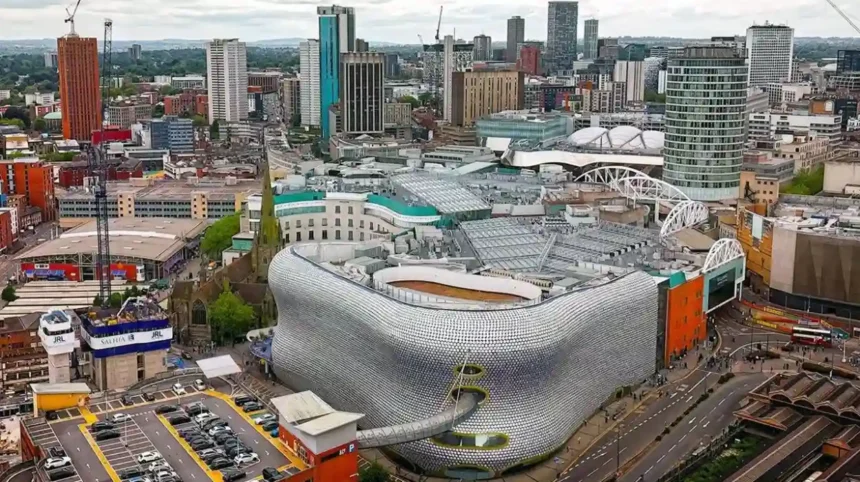
Birmingham has developed one of the United Kingdom’s most diverse urban shopping landscapes. The city’s markets, food halls, independent shopping districts, and modern retail destinations reflect more than 850 years of commercial history. From medieval street trading to contemporary food markets celebrating global cuisines, Birmingham’s retail culture continues to evolve while preserving its historic foundations.
- Why has Birmingham remained one of Britain’s most important market cities?
- What makes the Bullring Markets the historic heart of Birmingham shopping?
- How do Birmingham’s food halls reflect the city’s multicultural identity?
- Which historic shopping districts define Birmingham’s commercial character?
- How has Birmingham balanced historic markets with modern shopping destinations?
- What architectural features distinguish Birmingham’s traditional markets and shopping spaces?
- How have Birmingham’s markets influenced local culture and community life?
- What preservation efforts protect Birmingham’s historic shopping heritage?
- Why do Birmingham’s markets and shopping experiences remain nationally significant today?
- Frequently Asked Question
Today, Birmingham welcomes millions of visitors annually to destinations including the Bullring markets, the Jewellery Quarter, Digbeth’s creative food scene, and restored Victorian arcades. These places represent more than shopping venues. They are cultural landmarks that demonstrate how commerce, migration, industrialisation, and urban regeneration have shaped England’s second-largest city.
Why has Birmingham remained one of Britain’s most important market cities?
Birmingham has remained a leading market city because continuous trading has existed since the twelfth century, supported by royal market rights, industrial expansion, railway development, multicultural communities, and sustained urban regeneration that preserved traditional markets while introducing modern retail destinations and food halls.
Birmingham’s commercial history began in 1166 when Peter de Birmingham received a Royal Charter from King Henry II granting the right to hold a weekly market. This charter transformed a small manor into a recognised market town and established the legal foundation for centuries of trade.
The medieval marketplace developed around what is now the Bull Ring. Farmers from Warwickshire, Worcestershire, and Staffordshire sold livestock, grain, vegetables, textiles, and household goods. These trading activities connected rural producers with an expanding urban population.
During the eighteenth century, Birmingham became one of Britain’s leading manufacturing centres. Industrial production increased demand for raw materials, finished goods, and commercial exchange. Metalworking, jewellery, firearms, buttons, and small manufactured products entered national and international markets through Birmingham merchants.
Railway expansion during the nineteenth century strengthened Birmingham’s commercial position. New transport links connected the city with London, Manchester, Liverpool, Bristol, and Scotland. Goods reached wider markets more efficiently, while agricultural produce arrived daily from surrounding counties.
Twentieth-century redevelopment altered much of Birmingham’s shopping landscape. Despite wartime bombing and post-war reconstruction, the city’s traditional markets survived. Modern regeneration programmes have preserved historic trading traditions alongside contemporary shopping centres and food halls.
Today, Birmingham’s markets continue serving local residents, independent businesses, and international visitors while reflecting the city’s multicultural population.
To experience these historic commercial districts in person today, consult our comprehensive [How to Find Birmingham’s Best Markets, Food Halls, and Shops] for itineraries and visiting parameters.
What makes the Bullring Markets the historic heart of Birmingham shopping?
The Bullring Markets represent Birmingham’s oldest continuous trading location, combining more than eight centuries of market history with modern indoor and outdoor trading that supplies fresh food, household goods, clothing, and regional produce to thousands of weekly visitors.
The Bullring remains the symbolic centre of Birmingham’s commercial identity. Although buildings have changed repeatedly, organised trading has continued on this site since the medieval period.
The original market specialised in agricultural produce. Farmers sold livestock, cereals, vegetables, dairy products, and meat directly to urban consumers. Local authorities regulated weights, measures, pricing, and hygiene standards to maintain public confidence.
The nineteenth century introduced purpose-built market halls. Iron-framed buildings improved sanitation, weather protection, and trading efficiency. Victorian engineering allowed larger covered spaces with better ventilation and natural lighting.
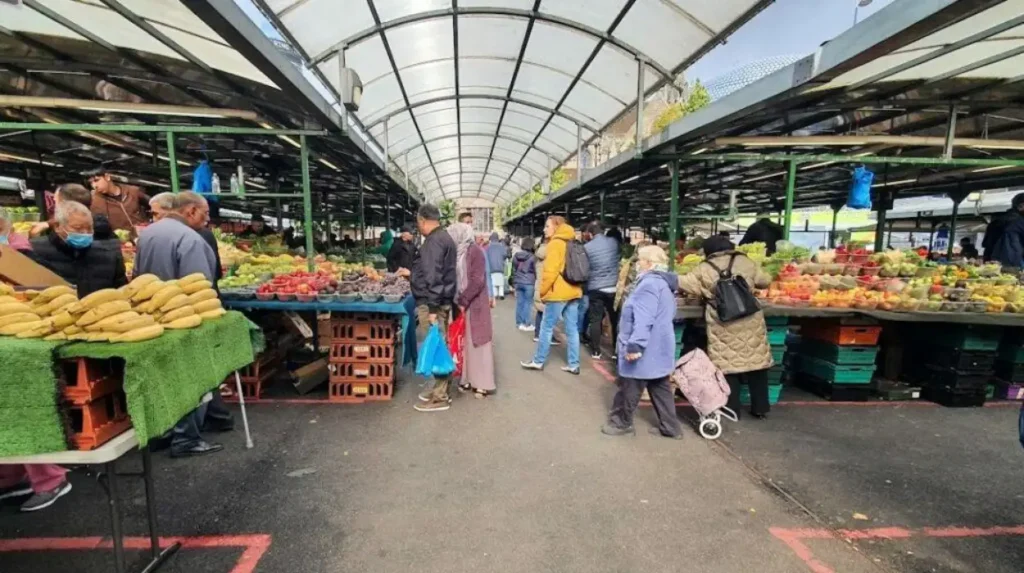
The present Bullring Open Market operates six days each week. Hundreds of traders offer fresh fruit, vegetables, seafood, meat, flowers, fabrics, tools, and household products. Independent family businesses remain central to its operation.
The Indoor Market complements outdoor trading with specialist retailers selling international groceries, baked goods, clothing, electronics, and traditional market products.
Market diversity reflects Birmingham’s changing population. Communities originating from South Asia, the Caribbean, Africa, Eastern Europe, and the Middle East have introduced new ingredients, spices, and specialist foods that broaden the city’s culinary landscape.
The Bullring Markets continue supporting small independent businesses while preserving one of England’s oldest commercial traditions.
How do Birmingham’s food halls reflect the city’s multicultural identity?
Birmingham’s food halls showcase the city’s multicultural communities through regional British produce alongside cuisines introduced by migration, creating shared dining spaces that represent cultural diversity, local entrepreneurship, and evolving urban regeneration within historic commercial districts.
Food halls have become central features of Birmingham’s modern visitor economy. Unlike traditional shopping centres, they combine independent food businesses with communal dining environments that encourage social interaction.
The city’s culinary diversity developed through successive waves of migration after the Second World War. Workers arriving from South Asia, Ireland, the Caribbean, China, Eastern Europe, Africa, and the Middle East established grocery shops, restaurants, bakeries, and specialist food retailers.
Modern food halls bring these traditions together under one roof.
The historic role of Digbeth
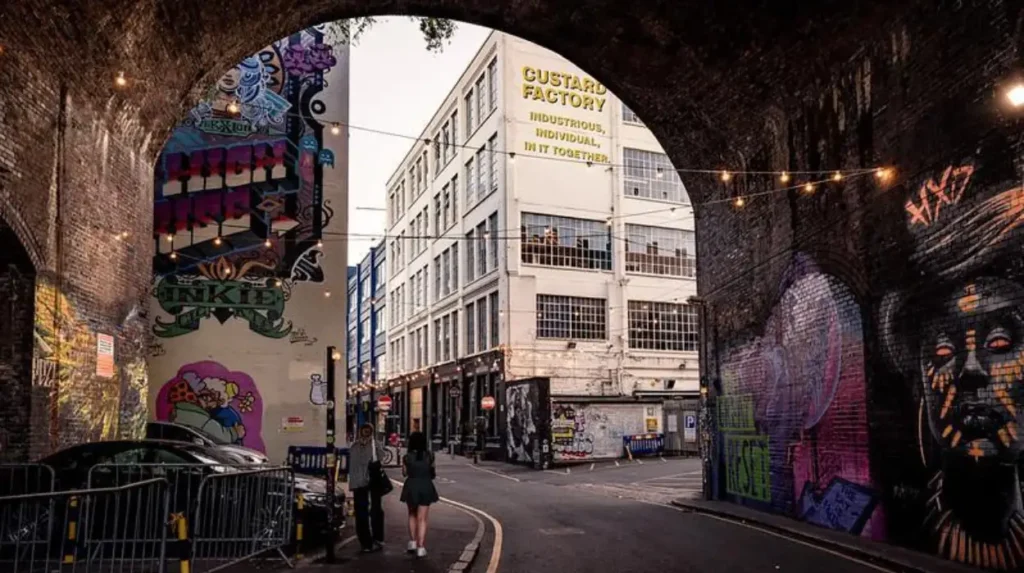
Digbeth stands among Birmingham’s oldest industrial districts. Warehouses, factories, and wholesale markets dominated the area throughout the nineteenth and twentieth centuries.
Urban regeneration transformed many industrial buildings into food venues, creative studios, and independent businesses without removing their historic architectural character.
Original brick warehouses now accommodate artisan bakeries, coffee roasters, breweries, street food vendors, and regional producers.
This adaptive reuse preserves industrial heritage while supporting new commercial activity.
Independent producers and local sourcing
Many Birmingham food halls prioritise regional suppliers.
Produce commonly includes:
- Warwickshire cheeses
- Worcestershire meats
- Herefordshire cider
- Midlands bakery products
- Seasonal vegetables from surrounding counties
These supply chains strengthen regional agriculture while reducing transportation distances.
Food halls therefore support both heritage preservation and contemporary sustainable business practices.
Which historic shopping districts define Birmingham’s commercial character?
Birmingham’s historic shopping districts combine preserved Victorian architecture, specialised manufacturing traditions, independent retailers, and cultural heritage, creating commercial environments that demonstrate how historic industries continue supporting tourism, craftsmanship, and local economic development today.
Different districts developed specialised commercial identities over several centuries.
Each area reflects particular industries and economic functions that contributed to Birmingham’s growth.
The Jewellery Quarter
The Jewellery Quarter emerged during the eighteenth century as Britain’s leading jewellery manufacturing district.
Today, approximately 40 percent of jewellery produced in the United Kingdom continues to originate from businesses based in this historic neighbourhood.
More than 100 specialist retailers operate alongside working workshops.
Visitors purchase handcrafted jewellery directly from manufacturers while observing traditional production methods that remain largely unchanged.
The district also contains museums, restored factories, listed buildings, and heritage trails documenting Birmingham’s internationally recognised metalworking industry.
Great Western Arcade
Completed in 1876, the Great Western Arcade occupies part of a former railway station destroyed by fire.
Its Victorian architecture features decorative ironwork, glass roofing, and ornamental detailing characteristic of nineteenth-century shopping arcades.
Independent retailers dominate the arcade rather than multinational chains.
Bookshops, artisan food retailers, cafés, fashion boutiques, and gift shops contribute to its distinctive atmosphere.
Piccadilly Arcade
Built during the early twentieth century, Piccadilly Arcade reflects Edwardian commercial architecture.
The arcade preserves decorative façades, traditional shopfronts, and historic interiors while accommodating modern independent businesses.
Together, Birmingham’s historic arcades demonstrate the evolution of enclosed shopping environments before the development of large retail centres.
How has Birmingham balanced historic markets with modern shopping destinations?
Birmingham balances heritage and modern retail through conservation-led redevelopment, integrating historic markets with contemporary shopping centres, restored public spaces, and improved transport connections while preserving commercial continuity that dates back to the medieval period.
Urban redevelopment has significantly altered Birmingham’s city centre since the mid-twentieth century.
Following extensive wartime bombing, planners rebuilt many commercial districts using modern architectural principles.
Later regeneration programmes increasingly recognised the importance of preserving historic identity alongside economic development.
The Bullring Shopping Centre opened in its current form in 2003, replacing previous post-war structures.
Its contemporary architecture contrasts with nearby historic markets while maintaining the site’s centuries-old commercial function.
Public spaces surrounding the shopping centre reconnect historic streets with modern retail environments.
Improved pedestrian routes encourage movement between the Bullring Markets, New Street Station, historic arcades, and nearby cultural attractions.
This integrated planning supports tourism, local commerce, and heritage conservation simultaneously.
Rather than replacing traditional markets, redevelopment strengthened their accessibility and long-term viability.
What architectural features distinguish Birmingham’s traditional markets and shopping spaces?
Birmingham’s traditional commercial architecture reflects medieval street layouts, Victorian iron engineering, Edwardian decorative design, industrial warehouses, and modern adaptive reuse, illustrating successive phases of urban development through preserved commercial buildings and regenerated retail environments.
Commercial architecture provides valuable evidence of Birmingham’s economic development.
Different periods introduced distinctive building techniques and commercial planning principles.
Medieval markets relied on open public squares where temporary stalls accommodated weekly trading.
Victorian engineers introduced cast iron, steel framing, and large glass roofs.
These innovations created spacious covered markets protected from weather while allowing natural daylight.
Shopping arcades adopted elegant decorative features including mosaic floors, ornamental façades, wrought iron detailing, and glazed roofs.
Industrial warehouses constructed from locally manufactured brick later became important regeneration assets.
Rather than demolishing these buildings, developers converted them into restaurants, food halls, creative workspaces, and specialist retail premises.
Adaptive reuse reduced demolition waste while preserving Birmingham’s industrial character.
Modern retail developments employ contemporary materials including glass, steel, and reinforced concrete but frequently incorporate public art, heritage interpretation, and improved pedestrian accessibility.
The resulting cityscape demonstrates more than eight centuries of commercial architecture.
How have Birmingham’s markets influenced local culture and community life?
Birmingham’s markets have shaped community life by supporting independent businesses, encouraging cultural exchange, preserving traditional crafts, promoting regional agriculture, and providing accessible public spaces where residents from diverse backgrounds interact through everyday commerce.
Markets perform social as well as economic functions.
Historically, weekly markets allowed rural producers and urban consumers to exchange goods, information, and news.
These interactions strengthened regional connections throughout the Midlands.
Migration expanded Birmingham’s cultural diversity during the twentieth century.
Markets became important places where new communities established businesses and introduced traditional products unavailable through mainstream retailers.
This commercial diversity strengthened cultural integration.
Independent traders often represent multiple generations of family ownership.
Knowledge, customer relationships, and specialist skills transfer between generations, preserving commercial traditions despite changing economic conditions.
Markets also provide affordable opportunities for small businesses entering retail.
Compared with permanent high-street premises, market stalls require lower investment, encouraging entrepreneurship.
Seasonal festivals further reinforce community identity.
Christmas markets, food festivals, craft fairs, and cultural celebrations attract local residents and visitors while supporting independent businesses.
These events extend the historic role of markets as gathering places beyond purely commercial activity.
What preservation efforts protect Birmingham’s historic shopping heritage?
Historic preservation combines listed building protection, conservation areas, adaptive reuse projects, archaeological research, and heritage-led regeneration that safeguards Birmingham’s commercial history while allowing continued economic use of important market buildings and shopping districts.
Heritage protection operates through several legal and planning mechanisms.
Historic England maintains the National Heritage List for England, identifying buildings of special architectural or historic significance.
Many Birmingham commercial buildings receive statutory protection through listed status.
Conservation areas preserve the broader historic character of districts including the Jewellery Quarter.
Planning regulations control alterations affecting historic streetscapes, building materials, and architectural details.
Archaeological investigations have documented earlier market activity beneath modern developments.
Excavations reveal medieval street layouts, foundations, pottery, animal bones, and commercial waste that improve understanding of Birmingham’s early economy.
Museums preserve historic objects associated with market trading.
Collections include weighing equipment, shop signs, manufacturing tools, commercial records, and photographs documenting changing retail environments.
Universities continue researching Birmingham’s commercial development using archival records, census returns, historic maps, trade directories, and municipal documents.
These sources support evidence-based interpretation of the city’s commercial heritage.
Why do Birmingham’s markets and shopping experiences remain nationally significant today?
Birmingham’s markets remain nationally significant because they combine uninterrupted trading traditions, industrial heritage, multicultural food culture, independent retail, architectural preservation, and continuous regeneration, creating one of Britain’s most historically layered and economically resilient commercial destinations.
Few British cities demonstrate such clear continuity between medieval markets and contemporary retail.
Birmingham has successfully preserved traditional commercial functions while adapting to changing consumer behaviour.
Independent businesses remain fundamental to this success.
Markets continue providing accessible retail opportunities unavailable within larger chain-dominated shopping centres.
Historic districts attract cultural tourism while supporting local employment and specialist manufacturing.
The Jewellery Quarter illustrates this balance particularly well by combining active production with heritage interpretation.
Food halls demonstrate Birmingham’s evolving identity as one of Europe’s most culturally diverse cities.
Traditional British produce exists alongside cuisines introduced through international migration, reflecting the city’s demographic history.
Urban regeneration has strengthened rather than erased commercial heritage.
Historic warehouses, arcades, and markets continue serving contemporary economic purposes instead of becoming static museum spaces.
This living heritage distinguishes Birmingham from many historic commercial centres.
As retail technology, consumer behaviour, and tourism continue evolving, Birmingham’s markets remain relevant because they offer authenticity, local identity, and direct interaction between producers, traders, and customers. These enduring qualities ensure that Birmingham’s historic commercial landscape continues contributing to the city’s cultural identity, regional economy, and national heritage while remaining one of Britain’s most compelling destinations for markets, food halls, and distinctive shopping experiences.
Frequently Asked Question
What is the best shopping area to visit in Birmingham for history and local culture?
The Bullring Markets are the best place to experience Birmingham’s historic shopping culture. With over 850 years of continuous trading, they offer fresh produce, international foods, independent retailers, and a glimpse into the city’s rich commercial heritage. Visitors can also explore the nearby Jewellery Quarter, Great Western Arcade, and Digbeth to discover Birmingham’s unique blend of history, craftsmanship, multicultural cuisine, and modern shopping experiences.