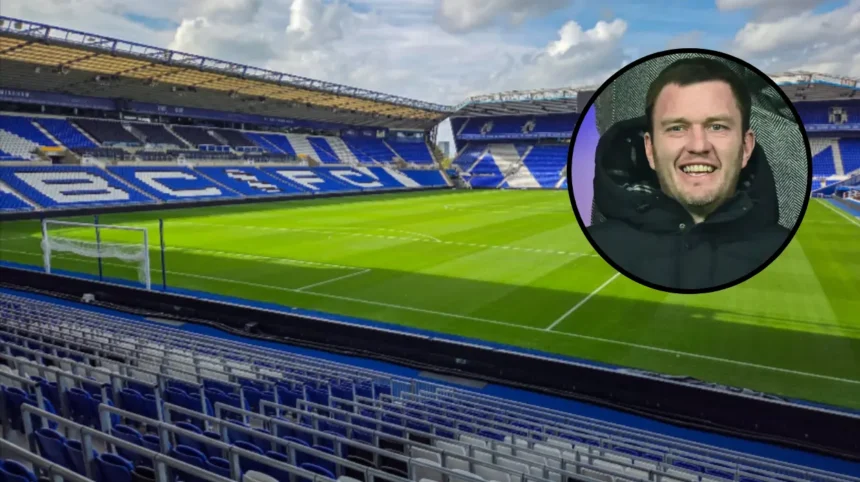
- Role Relinquished: Craig Gardner has officially left his position as Director of Football at Birmingham City Football Club.
- Tenure Details: Gardner held the Director of Football role since February 2025, having previously served as Technical Director for three and a half years starting in the summer of 2021.
- Ownership Inception: The 39-year-old former midfielder played a pivotal role in facilitating and finalising the takeover of the club by Knighthead Capital Management LLC in July 2023.
- Strategic Mandate: His executive responsibilities included establishing a unified club playing identity, defining a consistent philosophy for the men’s first team, and creating a seamless transition pathway from the youth academy to senior football.
- On-Field Performance: During his administrative oversight, Birmingham City secured a record-breaking promotion from League One during the 2024–25 campaign and subsequently secured a 10th-place finish in the Sky Bet Championship, concluding the season nine points adrift of the play-off positions.
- Deep Roots: Beyond his executive career, Gardner’s history at St Andrew’s includes two permanent playing spells, a coaching role initiated in 2019, and a brief period as interim manager following the exit of Pep Clotet.
Birmingham (Birmingham Express) June 5, 2026 – In a significant administrative restructuring at St Andrew’s, Birmingham City Football Club has confirmed that its Director of Football, Craig Gardner, has vacated his position with immediate effect. The 39-year-old former Blues midfielder, who transitionally moved into senior executive operations in 2021 before being elevated to Director of Football in February 2025, leaves a club positioned in the upper tier of the EFL Championship following a period of extensive structural and financial transition under American ownership group Knighthead Capital Management.
- Why Has Craig Gardner Left Birmingham City?
- What Was Craig Gardner’s Statement on His Departure?
- What Role Did Craig Gardner Play in the Knighthead Takeover?
- How Successful Was Craig Gardner as Director of Football?
- What Is Craig Gardner’s Playing and Coaching History?
- Who Will Replace Craig Gardner at Birmingham City?
- How Did the Media Cover Craig Gardner’s Departure?
Why Has Craig Gardner Left Birmingham City?
The official announcement of Gardner’s departure marks the conclusion of a highly influential five-year stretch within the club’s modern infrastructure. While the club has not cited a specific single catalyst for the separation, statements issued by both parties indicate an amicable parting focused on natural transition. Gardner expressed a desire to step away from the relentless demands of football administration to spend time with his family, whilst acknowledging that the foundational work required to return the club to elite-level football has been largely completed.
The structural evolution under Knighthead Capital, led by Tom Wagner and featuring high-profile stakeholders such as seven-time Super Bowl champion Tom Brady, has brought relentless ambition to the West Midlands. In the elite ecosystem envisioned by the current board, executive structures are constantly evaluated to align with long-term global sporting objectives.
Writing for the club’s media channels, Gardner reflected directly on his exit strategy, noting his intent to return to the club purely in a supporting capacity. His departure opens a critical vacancy in the hierarchy at St Andrew’s at a time when recruitment, squad building, and data-driven profiling are paramount to securing promotion to the Premier League.
What Was Craig Gardner’s Statement on His Departure?
In an emotional and comprehensive valedictory statement published directly on the official Birmingham City FC digital platform, Gardner extended his gratitude to the ownership group, operational staff, and the club’s fan base.
As published via the official club website communications, Gardner stated:
“It’s been an honour for me to represent Birmingham City in multiple capacities. I’ve worked tirelessly to put the club back in a position for Premier League football and I believe that is not far away. I’d like to thank the club and Knighthead for their support and I’m excited to see the journey continue. To the fans, you have been a huge part as to why I’ve been here, you inspire us all and I thank you so much. I now look forward to some time with my family and then to joining you as a fan in the stadium.”
The tone of the statement underscores a deeply personal connection to the club, emphasizing that his tenure was driven by a vocational commitment to the badge rather than a merely professional engagement. By pivoting his future stance to that of a conventional supporter, Gardner has sought to maintain the strong rapport he cultivated with the St Andrew’s faithful across nearly two decades of fluctuating fortunes.
What Role Did Craig Gardner Play in the Knighthead Takeover?
To fully comprehend Gardner’s legacy at Birmingham City, sports historians must look back to the pivotal summer of 2023. Prior to the arrival of Knighthead Capital Management LLC, the club suffered under years of opaque ownership, underinvestment, and systemic infrastructure decline under Birmingham Sports Holdings Limited (BSHL).
As a technical director operating under immense financial restrictions, Gardner became a crucial point of continuity and institutional knowledge. When Tom Wagner’s Knighthead Capital initiated their due diligence processes to acquire the club, Gardner acted as a primary bridge between the existing football staff and the inbound American financiers.
His deep understanding of the English Football League landscape, valuation of assets, and realistic assessment of the academy’s hidden strengths provided the incoming owners with a blueprint for immediate stabilization. The successful finalisation of that takeover in July 2023 reset the trajectory of the entire institution, moving them from relegation survival specialists to one of the most financially potent forces outside of the top flight. Without Gardner’s administrative navigation during those sensitive transitional months, the operational handover could have faced severe regulatory and logistical hurdles.
Explore More Birmingham City FC News
Year Nine Signs Two‑Year Deal with Birmingham City Academy 2026
Birmingham City confirm major WSL squad departures, Birmingham City FC 2026
How Successful Was Craig Gardner as Director of Football?
An assessment of Gardner’s tenure reveals a complex, highly dramatic period on the pitch, balanced by significant structural growth behind the scenes. Appointed fully to the Director of Football role in February 2025 after a lengthy apprenticeship as Technical Director, Gardner was tasked with a highly ambitious mandate by the executive board.
Strategic Mandate and Frameworks
- Unified Club Identity: Establishing a uniform tactical philosophy that mirrored modern, high-pressing, possession-based football across all senior and reserve squads.
- Academy Integration: Formulating a “seamless process” whereby elite local prospects within the youth system could transition into the men’s first team without experiencing developmental stagnation.
- Recruitment Operations: Overseeing a multi-million-pound recruitment drive funded by Knighthead, targeting high-value domestic and continental talent capable of outgrowing the lower divisions.
The financial reality of his strategy manifested vividly during the 2024–25 League One campaign. Following a shock relegation, the club responded with an unprecedented, record-breaking spending campaign that shattered third-tier records. Under Gardner’s recruitment oversight, the club secured immediate promotion back to the Championship.
In the subsequent season, the club achieved a 10th-place finish in the highly competitive Championship division. While ending the year nine points short of the promotion play-off lottery, the campaign stabilized Birmingham City as a forward-facing entity, a stark contrast to the perennial relegation battles that characterized the pre-Knighthead era.
What Is Craig Gardner’s Playing and Coaching History?
Gardner’s relationship with West Midlands football is extraordinarily rare, as he represents one of the few figures to have crossed fierce local ideological divides while maintaining professional respect. Born in Solihull, Gardner began his senior playing career at Aston Villa, making over 80 appearances before completing a high-profile move to Birmingham City in January 2010.
During his initial playing stint with the Blues, Gardner achieved legendary status as a dynamic, goalscoring central midfielder. He was a cornerstone of the historic squad that defeated Arsenal 2-1 to lift the League Cup at Wembley Stadium in 2011. Following subsequent top-flight spells with Sunderland and West Bromwich Albion, Gardner returned home to St Andrew’s in 2017, initially on loan before making the move permanent, eventually transitioning from player to player-coach.
When his playing days concluded, Gardner immediately threw himself into the coaching staff in 2019. Following the departure of manager Pep Clotet during a turbulent close to the 2019–20 season, Gardner stepped up alongside Steve Spooner to take interim administrative and tactical control of the first team, successfully steering the club away from the threat of relegation to League One. Following a brief developmental stint away as a first-team coach at Sheffield Wednesday under Tony Pulis, the pull of St Andrew’s proved absolute; he returned in January 2021, laying the groundwork for his formal ascendancy into the boardroom later that summer.
Who Will Replace Craig Gardner at Birmingham City?
The vacancy left by Gardner presents Knighthead Capital with an opportunity to reshape the club’s sporting department according to the next phase of their project. Industry analysts suggest that the ownership group may look toward a candidate with extensive continental or global recruitment networks, matching the club’s desire to leverage advanced data analytics and international scouting profiles.
The modern sporting director role requires a delicate balance of deep financial regulation literacy—specifically regarding the EFL’s Profitability and Sustainability Rules (PSR)—and a sophisticated grasp of modern tactical systems. Whoever inherits the office at St Andrew’s will find a club well-positioned financially, possessing an elite modern academy infrastructure and a senior squad calibrated for an aggressive push toward the Premier League.
For the time being, the club’s existing recruitment specialists and technical staff will manage internal operations collectively, ensuring that summer transfer targets and academy contracts remain uncompromised during this period of executive transition.
How Did the Media Cover Craig Gardner’s Departure?
The news of Gardner stepping down has generated widespread analysis across major national and regional sports desks, with various football journalists providing unique viewpoints on his administrative legacy.
Reporting on the structural shifts in the West Midlands for The Athletic, senior football writer Richard Sutcliffe noted that Gardner’s departure represents “the end of a transitional era at St Andrew’s,” adding that his presence was “the critical tether linking the traditional soul of the club to the hyper-modern corporate vision introduced by Knighthead Capital.” Sutcliffe highlighted that Gardner’s work behind the scenes during the initial months of the American takeover prevented significant institutional friction.
Simultaneously, writing for the BBC Sport football portal, regional sports journalist Mishi Khan detailed the tactical footprint left by the departing executive. Khan reported that under Gardner’s guidance, Birmingham City “sought to aggressively shed its historic reputation as a volatile, reactive club, replacing it with a heavily structured recruitment paradigm that favored long-term asset value over short-term squad fixes.” Khan pointed to the record-breaking League One campaign as tangible proof of Gardner’s ability to execute high-pressure strategic targets under intense public scrutiny.
From a local perspective, Birmingham Live football correspondent Colin Tattum offered insight into the emotional weight of the exit. Tattum stated that “few figures in modern Blues history have carried the heavy burden of expectation quite like Craig Gardner,” noting that “to transition successfully from a League Cup-winning player to an interim manager, and finally to the architect of a billion-pound fund’s football operations, requires a rare level of political and sporting intelligence.” Tattum concluded that while critics will point to the club’s roller-coaster league placements, Gardner leaves the club in an incomparably healthier state than he found it.
Finally, compiling an analytical review for Sky Sports News, senior reporter Rob Dorsett emphasized the timing of the boardroom vacancy. Dorsett observed that “Knighthead’s ambitions do not allow for plateaus,” suggesting that “with Birmingham City finishing 10th in their return to the Championship, the ownership’s gaze is fixed entirely on the apex of English football. Gardner’s departure, while entirely amicable, signals a natural moment for the board to integrate a globally recognized recruitment model designed specifically to clear the final hurdle into the top flight.”