Key Points
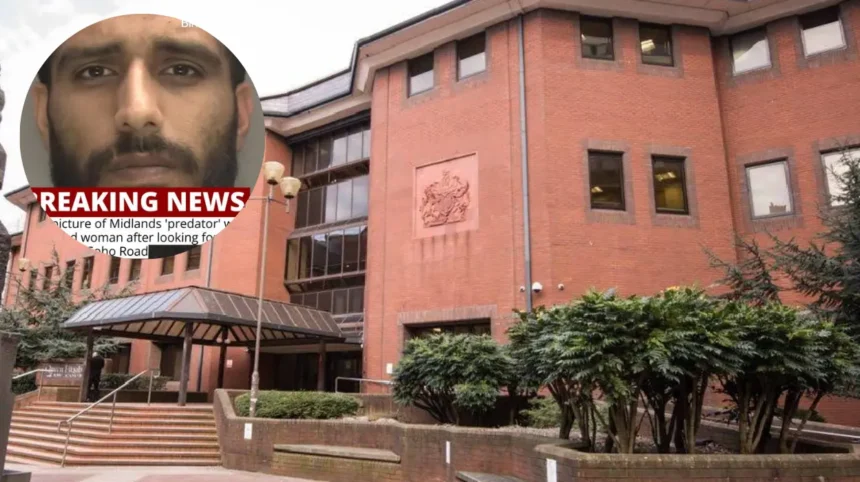
- Tanveer Singh, 32, from Leopard Lane, West Bromwich, has been found guilty of murdering 41‑year‑old Shara Millar after a two‑week trial at Birmingham Crown Court.
- The attack occurred last year in Birmingham, with the victim’s body found at an industrial site in Smethwick in the early hours of 11 August.
- A post‑mortem examination concluded that Millar died from strangulation, carried out inside a white sprinter delivery van.
- Singh, a delivery driver, was arrested near his West Bromwich home after police linked him to CCTV footage of a white van near Woodburn Road in Smethwick.
- The jury heard that Singh had been out drinking heavily and using cocaine the night before the killing, and that he carried out a “deliberate act of squeezing” Millar’s neck inside the van before leaving her face down on the pavement.
- Singh will be sentenced on 27 May 2026 at Birmingham Crown Court, having been convicted of murder following the trial.
Tanveer Singh Guilty of Strangling Woman in Smethwick
Birmingham(Birmingham Express) May 17, 2026 – Tanveer Singh, 32, from Leopard Lane, West Bromwich, has been found guilty of murdering 41‑year‑old sex worker Shara Millar in a case that unfolded at Birmingham Crown Court. Following a two‑week trial, the jury convicted Singh of murder after hearing that he strangled Millar inside the back of his work van before leaving her body at an industrial site in Smethwick.
- Key Points
- Tanveer Singh Guilty of Strangling Woman in Smethwick
- Who was Tanveer Singh and what was the crime?
- How did the investigation link Singh to the scene?
- Details revealed at the Birmingham Crown Court trial
- What is the next stage for Singh legally?
- Background to the case and its wider context
- How this verdict may affect victims’ families, sex workers and local communities
Who was Tanveer Singh and what was the crime?
As reported by BBC News, Tanveer Singh worked as a delivery driver and was out with friends the night before the killing, having consumed alcohol and taken cocaine. During the trial, prosecutors told the court that Singh carried out a “deliberate act of squeezing” Millar’s neck while they were in the rear of his white sprinter van. A post‑mortem examination later confirmed that Millar died from strangulation.
ITV News Central reported that Millar’s body was discovered in the early hours of 11 August at an industrial location in Smethwick, close to Birmingham. The same report notes that police officers later attended Singh’s home address in West Bromwich and arrested him on suspicion of murder, before he was formally charged.
How did the investigation link Singh to the scene?
According to ITV News, investigators used CCTV footage that showed a white sprinter van arriving at Woodburn Road in Smethwick shortly before Millar’s body was found. Police traced the vehicle to Singh and stopped him in a car near his Leopard Lane home, where he was then taken into custody.
The Sun said Singh had been “prowling for women on Soho Road in Birmingham” before the attack, highlighting that detectives linked the distinctive white van to his movements on the night of the killing. In court, the prosecution described how Singh killed Millar in the confined space of the van and then left her face down on the pavement at the industrial site.
Details revealed at the Birmingham Crown Court trial
In coverage from BBC News, the jury at Birmingham Crown Court heard that Singh had a history of alcohol and drug use, and that he had been drinking heavily the night before the assault. Prosecutors argued that the act of squeezing Millar’s neck was intentional and fatal, not accidental, and that he left her body at the site after the attack.
ITV News explains that the trial lasted two weeks, during which jurors were presented with forensic evidence, CCTV material, and witness statements linking Singh to the van and to the location where Millar’s body was found. The court also heard that officers carefully pieced together vehicle movements and mobile‑data records to establish Singh’s timeline on the night of 10–11 August.
What is the next stage for Singh legally?
As reported by ITV News Central, Singh will be sentenced on 27 May 2026 at Birmingham Crown Court after being found guilty of murder. The same source notes that the case has been treated as a serious homicide, with the West Midlands Police and Crown Prosecution Service co‑ordinating the prosecution.
The Sun reported that the trial judge told the court the sentencing would reflect the “clear and deliberate” nature of the attack, with the defendant having strangled Millar in the back of his work van. No further details about possible mitigating factors or defence arguments were disclosed publicly in the immediate verdict‑day reports.
Background to the case and its wider context
The killing of Shara Millar has drawn attention to the safety of sex workers in and around Birmingham, as well as to how law‑enforcement agencies respond to attacks in industrial and semi‑isolated areas such as Smethwick. As BBC News notes, the case began with a routine call to an industrial site where Millar’s body was found, prompting a detailed homicide investigation that later focused on CCTV of a white sprinter van.
The fact that Singh was a delivery driver, regularly using a large vehicle on public roads, meant that investigators could lean heavily on traffic‑camera networks and mobile‑data records to reconstruct his movements. Smethwick’s proximity to central Birmingham, combined with its mix of residential and light‑industrial spaces, has made it a recurring location in both local crime reporting and policing analyses.
How this verdict may affect victims’ families, sex workers and local communities
For the family and friends of Shara Millar, the guilty verdict against Tanveer Singh provides a formal legal conclusion to the circumstances of her death, though it does not remove the emotional impact of the killing. Community‑support groups that work with sex workers in Birmingham have often highlighted that attacks in semi‑isolated or industrial areas can be difficult to investigate without strong CCTV coverage and timely reporting.
For local residents in Smethwick and West Bromwich, the case may renew concern about safety on poorly lit streets and around industrial sites, particularly at night. Police and local authorities may respond by reviewing patrols, CCTV coverage, and street‑lighting in areas with similar characteristics, as has been seen in previous homicide‑linked reviews in the West Midlands.