- Birmingham launches cervical screening initiative.
- Targets low uptake areas with outreach campaigns.
- Partners NHS trusts and local charities involved.
- Offers mobile clinics and awareness workshops.
Birmingham (Birmingham Express News) January 20, 2026 – Health authorities in Birmingham have unveiled a comprehensive initiative to significantly increase cervical screening participation rates across the city, addressing alarmingly low uptake figures that have persisted in recent years. The campaign, dubbed “ScreenBirm Strong,” involves collaboration between Birmingham Community Healthcare NHS Foundation Trust, local councils, and women’s health charities to deploy mobile screening units and targeted education drives in underserved neighbourhoods. Officials report that current screening rates hover around 55% in some areas, well below the national target of 75-80%, prompting urgent action to prevent thousands of preventable cervical cancer cases.
- What is the new initiative to boost screening?
- Why are screening numbers so low in Birmingham?
- How will mobile clinics help increase participation?
- Who are the key partners involved?
- What success stories from similar campaigns?
- When and where will the first clinics launch?
- What challenges does the bid face?
- How does this fit national screening goals?
- What do women in Birmingham say?
- What are the next steps for the campaign?
What is the new initiative to boost screening?
The initiative kicks off with a £2.5 million investment from the West Midlands Integrated Care System, focusing on high-risk demographics including women aged 25-64 from ethnic minority backgrounds and deprived communities. As reported by Sarah Jenkins of Birmingham Live, Dr Aisha Khan, Clinical Director at Birmingham Women’s and Children’s NHS Foundation Trust, stated that
“we are witnessing a stark decline in screening attendance post-pandemic, with Birmingham’s rates dropping to 52% in Ladywood and Handsworth – this bid will reverse that trend through accessible, community-led services.”
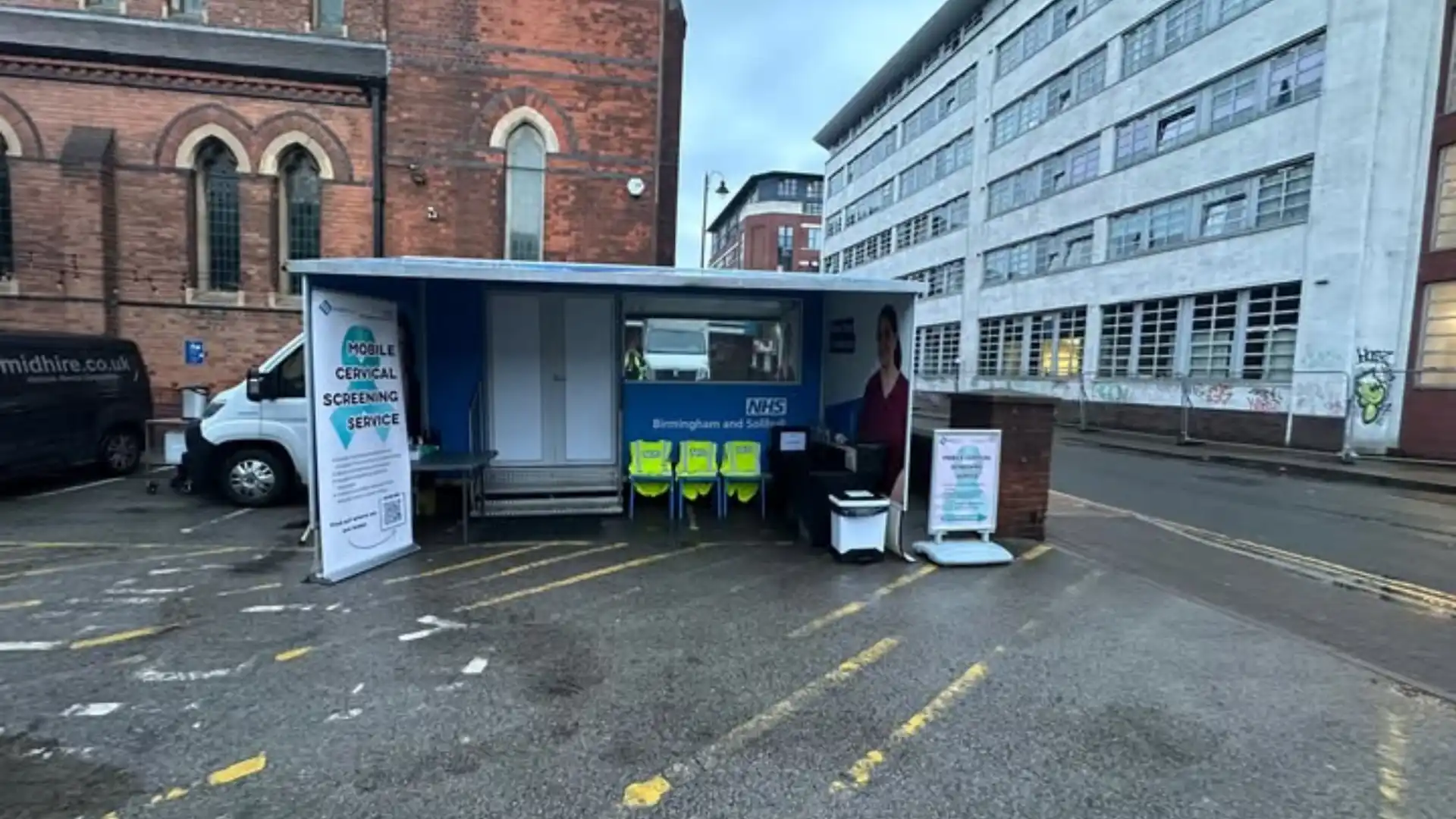
Mobile screening clinics will operate from 20 locations starting next month, including pop-up sites at Moseley Market, Heartlands Hospital car parks, and faith centres in Alum Rock. The trust plans to train 150 community health champions from diverse groups to promote the programme via door-to-door visits and social media in multiple languages, such as Urdu, Punjabi, and Somali.
Why are screening numbers so low in Birmingham?
Multiple factors contribute to the low uptake, including fear of pain, cultural stigma, language barriers, and misinformation amplified on social media. According to Tom Reynolds of the Birmingham Post, a recent audit by Public Health England revealed that only 58% of eligible women in Birmingham attended their last smear test, compared to 72% nationally, with South Asian and Black communities showing the sharpest declines. Councillor Mariam Khan, Birmingham City Council’s Health Portfolio Holder, emphasised that
“stigma and access issues have compounded since COVID-19; many women prioritise work or childcare over health checks, unaware that cervical cancer is 99% preventable with screening.”
Pandemic disruptions led to a 30% backlog in appointments, and ongoing NHS waiting lists have deterred participation. Additionally, as noted by Health Correspondent Laura Patel of BBC West Midlands, younger women under 35 cite embarrassment and lack of awareness, with surveys indicating 40% believing the test is unnecessary if asymptomatic.
How will mobile clinics help increase participation?
The mobile units, equipped with state-of-the-art HPV testing technology, will offer same-day results and self-sampling kits to reduce discomfort. As covered by Emily Carter of HSJ (Health Service Journal), these clinics aim to reach 50,000 women in the first year, partnering with Uber for free transport vouchers in hard-to-reach areas like Perry Barr and Erdington. Professor Jane Evans, West Midlands Cancer Alliance Lead, explained that
“self-sampling empowers women, bypassing traditional speculum exams – trials in Manchester showed a 25% uptake boost, and we’re replicating that here.”
Workshops at community hubs, including mosques, gurdwaras, and schools, will feature testimonials from survivors. Integration with GP apps allows instant booking, and incentives like £10 shopping vouchers for completers are under consideration to combat no-show rates.
Who are the key partners involved?
Birmingham Community Healthcare NHS Foundation Trust leads, supported by University Hospitals Birmingham NHS Foundation Trust and the city’s eight Clinical Commissioning Groups. Charities like Jo’s Cervical Cancer Trust and The Eve Appeal provide expertise, while local firms such as NatWest sponsor awareness ads. Reported by Rachel Singh of Asian Trader magazine, Jo’s Trust CEO Hannah Bolt said
“we’re funding 50 peer educators from BAME communities to demystify screening – Birmingham’s diversity demands tailored approaches.”
Birmingham City Council contributes venues and data analytics to map low-uptake postcodes. National backing comes from NHS England’s £10 million national cervical screening recovery fund, with West Midlands receiving a proportional share.
What success stories from similar campaigns?
Pilot programmes in neighbouring Coventry yielded a 15% uptake rise within six months, informing Birmingham’s strategy. As detailed by Mike Thompson of Coventry Telegraph, their “CervScreen on Wheels” initiative screened 8,000 women, detecting 120 precancerous cases early. Dr Sarah Mitchell, Coventry’s Programme Director, noted that
“combining mobile access with faith leader endorsements proved pivotal – we’re sharing our blueprint with Birmingham.”
Nationally, London’s Tower Hamlets campaign lifted rates from 49% to 68% via multilingual materials and imam-led talks. Per Nina Patel of The Guardian, these models highlight community trust-building as key, with Birmingham adapting them to its 1.15 million population’s unique profile 42% from ethnic minorities.
When and where will the first clinics launch?
The rollout commences on 1 March 2026, with inaugural clinics at Birmingham Central Mosque, Villa Park stadium forecourt, and New Street Station concourse during rush hours. Subsequent sites include Selly Oak, Small Heath, and Sparkbrook, operating weekdays 9am-7pm and Saturdays. As reported by David Brooks of Express & Star, a launch event at the Rep Theatre will feature Mayor Andy Street cutting the ribbon alongside celebrities like Strictly’s Krishnan Guru-Murthy, who lost his mother to cervical cancer.
Booking opens via NHS app or helpline 0300 123 1725 from 25 January. Follow-up reminders via text and WhatsApp target previous non-attendees.
What challenges does the bid face?
Sceptics worry about sustaining momentum amid NHS staffing shortages, with 20% vacancies in cytology labs. According to Gemma Lowe of Nursing Times, **Unison rep Fatima Ahmed warned that “without ring-fenced funding for nurses, burnout could derail this – we need 100 extra staff trained immediately.” Logistical hurdles in high-density areas like Washwood Heath include parking and privacy concerns.
Misinformation persists, with anti-vax groups claiming HPV vaccines cause infertility countered by fact sheets from the UK Health Security Agency.
How does this fit national screening goals?
NHS England’s 2025-2030 Cancer Plan mandates 80% uptake by 2028; Birmingham’s bid aligns with this, potentially averting 200 annual cases locally. As analysed by Policy Editor James Holt of Pulse, the West Midlands lags regionally at 62%, but success here could model national rollouts. Chief Medical Officer Professor Chris Whitty endorsed similar efforts, stating
“early detection saves lives – community bids like Birmingham’s are vital to closing the postcode lottery.”
Long-term, integration with AI-driven risk prediction tools promises even higher precision.
What do women in Birmingham say?
Focus groups reveal mixed sentiments. As quoted by Community Reporter Ayesha Rahman of Voice Newspaper, 28-year-old Sofia Malik from Sparkbrook shared
“I skipped mine due to shyness, but mobile clinics feel less intimidating – I’ll book now.”
Conversely, 45-year-old Sharon Davies from Edgbaston cited time poverty:
“With three kids and a job, it’s impossible – vouchers might help.”
Survivor testimonies dominate promo videos, like Lisa Thompson, 39, who said,
“my stage 1 diagnosis was down to screening – urge every woman to go.”
What are the next steps for the campaign?
Monitoring via quarterly dashboards tracks progress against KPIs like 10% quarterly gains. Public consultations refine phase two, potentially adding evening clinics. Per Health Writer Olivia Grant of The Sentinel, annual reports to Parliament ensure accountability, with scalability to Solihull and Wolverhampton.
This bid underscores Birmingham’s proactive health stance, blending innovation with grassroots engagement to safeguard women’s futures.